Legora has emerged as one of the most talked-about legal AI tools, particularly among law firms exploring generative AI for research, drafting, and legal analysis. Like many tools in this category, it promises speed, breadth, and accessibility through conversational AI.
But as adoption increases, so does scrutiny. Legal teams quickly discover that not all “legal AI” tools solve the same problem, and many so-called Legora competitors are optimised for entirely different stages of legal work.
This guide looks at the top Legora competitors for legal AI, with a clear focus on how these tools differ in practice. Rather than comparing models or marketing claims, it examines where each tool fits in the legal workflow, what type of work it actually supports, and which teams it is best suited for.
The goal is simple. Help legal buyers understand when Legora is the right choice, when it is not, and which alternatives make sense if accuracy, execution, and complex contract work are the priority.
TL;DR
Legora is a strong general legal AI assistant for research, ideation, and first drafts. It is not designed for production legal work inside complex contracts.
The most credible Legora competitors fall into three categories:
- Workflow-embedded legal AI tools that compete on execution and accuracy
- General legal AI assistants that compete on breadth and chat
- High-volume review platforms that solve a different problem entirely
If your priority is production-grade drafting and review inside Microsoft Word, Definely is the strongest alternative to Legora.
What Is Legora (And What Counts as a Competitor)
Legora is best understood as a general-purpose legal AI assistant. Its core value is speed at the early stages of legal work, helping lawyers research issues, generate first drafts, and explore questions through conversational AI.
In practice, Legora works best when the task is exploratory rather than execution-critical. It is useful for research, issue spotting, and getting an initial draft on the page. Many teams use it to accelerate the first part of a task, before deeper legal judgement and validation are applied.
Where Legora falls short is at the point where legal risk concentrates. It is not designed to manage the structural mechanics of complex contracts, such as definitions, cross-references, and dependencies across related documents. It does not reliably surface knock-on effects when changes are made, and it leaves the burden of validation with the lawyer.
This matters because not every tool described as a “Legora competitor” is solving the same problem. In reality, a true competitor must either offer similar general legal AI capabilities for research and early drafting, or replace Legora at the execution stage by supporting drafting, review, and negotiation with far greater structural accuracy.
Understanding that distinction is essential for buyers comparing legal AI tools.
How to Choose Between Legora and Its Competitors
When comparing Legora with its competitors, the most important consideration is not which tool uses the most advanced model, but where accuracy is enforced in the workflow.
Many legal AI tools appear similar on the surface. In practice, they differ significantly in how much verification work they leave behind.
Where the AI lives
Legora and similar tools operate primarily through chat interfaces that sit outside the contract itself. This makes them effective for research and ideation, but less reliable once a document enters drafting, review, or negotiation.
Workflow-embedded tools operate directly inside Microsoft Word, alongside the live contract. This allows them to interact with definitions, cross-references, schedules, and formatting in real time. As a result, accuracy is enforced structurally rather than retrospectively.
This difference determines whether AI output reduces work or simply shifts it.
Verification burden
General legal AI tools can generate persuasive and well-structured output quickly. However, that output still needs to be checked, reconciled against precedent, formatted correctly, and validated for consistency across the document and any related agreements.
For complex contracts, this verification stage is where much of the promised time saving is either realised or lost. Tools that accelerate drafting but increase verification burden often fail to deliver meaningful efficiency gains in practice.
Type of legal work
Legora-style tools are well suited to early-stage legal work, such as research, issue spotting, and initial drafting. They perform best when speed and breadth matter more than precision.
They are less effective for negotiation-ready drafts, heavily negotiated agreements, and transactions involving multiple documents with shared definitions and dependencies. In those scenarios, the risk is not missing a clause, but introducing subtle inconsistencies that only surface late in the process.
For buyers, the key question is not which tool looks most capable, but which one reduces risk and verification effort at the stage of work that matters most.
Legora Competitors Compared Side by Side
Top 5 Legora Competitors for Legal AI
1. Definely
Best option for teams that need execution-grade accuracy for complex contract work
Overview
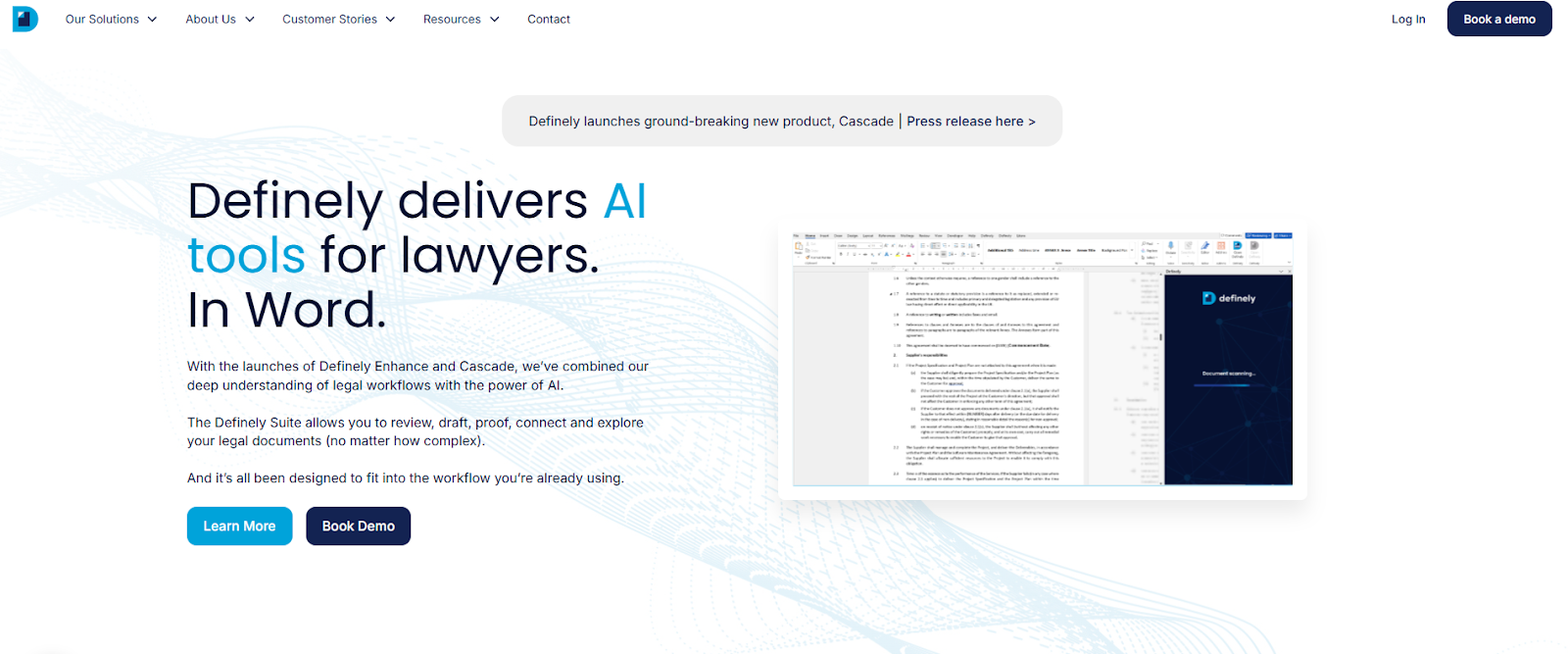
Definely is not a general legal AI assistant. It is a workflow-embedded legal AI platform designed to support drafting, review, and negotiation of complex contracts directly inside Microsoft Word.
Where Legora is used to generate answers, ideas, and early drafts, Definely is used when lawyers are working inside live contracts and need confidence that definitions, cross-references, and related documents remain consistent as changes are made. The emphasis is on accuracy, structure, and execution readiness rather than conversational flexibility.
How it compares to Legora
Legora is typically used at the exploratory stage of legal work. It helps lawyers research issues, think through problems, and generate initial drafting quickly. That makes it useful early in a task, particularly when speed and breadth matter more than precision.
Definely serves a different role. It supports lawyers at the point where contracts are being reviewed, negotiated, and finalised. Because it operates inside Word, Definely can interact directly with the structure of the document, including definitions, clause references, schedules, and linked agreements. This allows it to surface inconsistencies, gaps, and knock-on effects that general AI assistants are not designed to detect.
In practice, this means Legora helps lawyers move faster at the start, while Definely helps them reduce risk and verification effort at the end.
When Definely may be a better fit
Definely is often chosen when:
- Legal work involves long, heavily negotiated, or high-risk contracts
- Accuracy and consistency across clauses and related documents are critical
- Teams want AI support embedded directly into Microsoft Word
- Verification burden has become a bottleneck in drafting or review workflows
- In-house teams are focused on review, negotiation, and validation rather than drafting from scratch
It is particularly well suited to banking and finance, M&A, and complex commercial agreements where errors tend to arise between documents rather than within a single clause.
When Legora may be a better fit
Legora may be more suitable when:
- Teams want broad AI assistance across research, ideation, and drafting
- AI is primarily used outside live contract workflows
- Speed and flexibility are prioritised over structural accuracy
- Work is less dependent on complex contract mechanics or linked documents
Many teams ultimately use both, with Legora supporting early thinking and Definely supporting execution-stage work.
2. Harvey
Best general legal AI alternative to Legora for research and early drafting
Overview
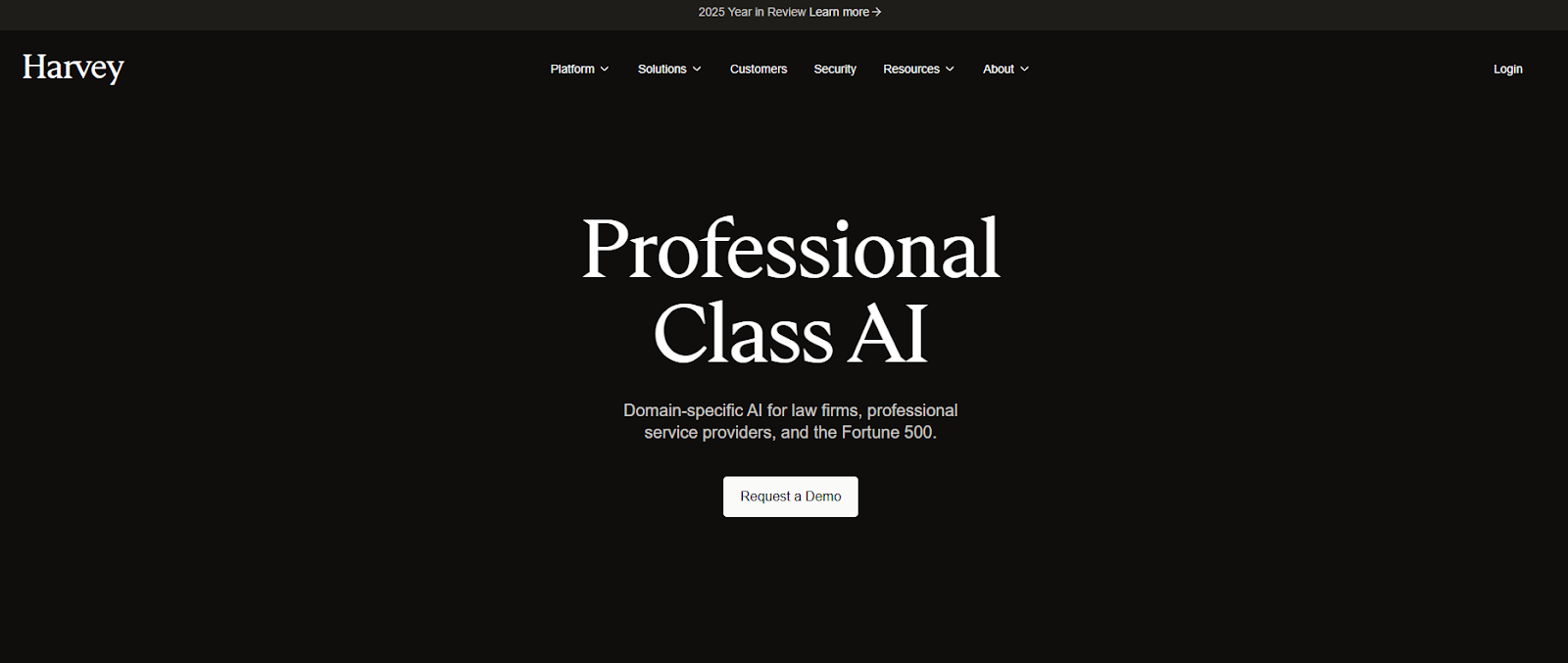
Harvey is a general-purpose legal AI platform used primarily by large law firms and legal teams for research, drafting assistance, and legal analysis. Like Legora, it is designed to help lawyers move faster across a wide range of tasks through conversational AI.
Its strength lies in flexibility. Harvey can be applied to many different legal questions and workflows, making it a common entry point for teams experimenting with generative AI in legal work.
How it compares to Legora
Harvey and Legora occupy largely the same category of legal AI. Both are used to support research, summarisation, and early-stage drafting, and both operate primarily outside live contract workflows.
The main difference is maturity and positioning. Harvey has broader adoption among large law firms and is often perceived as the default general legal AI assistant in enterprise environments. Legora is typically positioned similarly but may appeal to teams looking for an alternative with comparable breadth.
In practice, the two tools behave similarly in how they impact workflows. They can accelerate early thinking and drafting, but they still leave responsibility for validation, formatting, and structural accuracy with the lawyer.
When Harvey may be a better fit
Harvey is often preferred when:
- Teams want a single AI assistant that can support many legal tasks
- Research, summarisation, and exploratory drafting are core use cases
- Lawyers are comfortable validating AI-generated output manually
- AI is being adopted initially as a productivity aid rather than a production tool
It is particularly well suited to firms that want broad AI coverage without embedding AI deeply into specific workflows.
When Legora may be a better fit
Legora may be a better fit when:
- Teams want similar general legal AI capabilities but are comparing vendors
- AI is used primarily for ideation and early drafting rather than execution
- Flexibility and conversational use are prioritised over workflow depth
For most teams, the choice between Harvey and Legora is less about capability and more about preference, procurement, and fit with existing tooling.
3. LexisNexis
Best research-first alternative to Legora for source-backed legal analysis
Overview
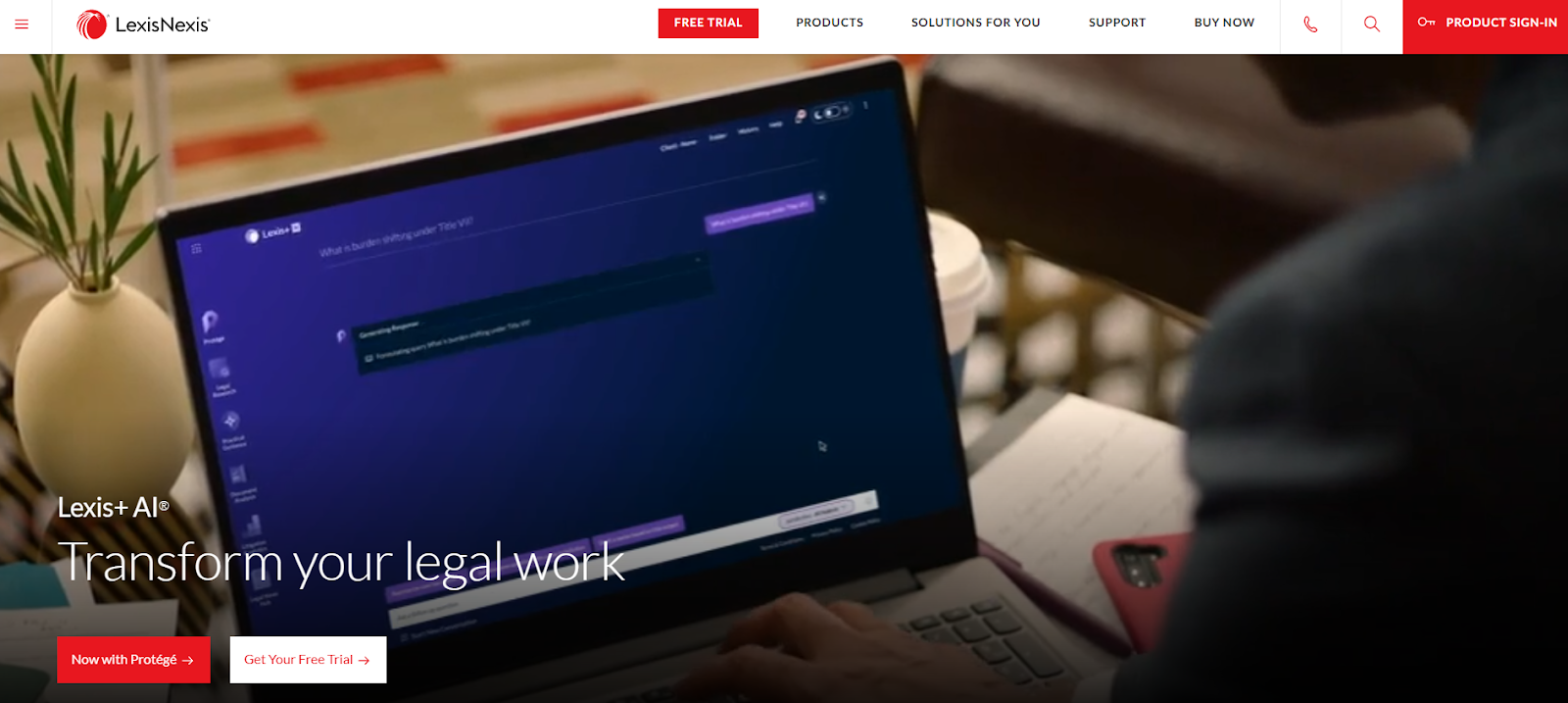
Lexis+ AI is a generative AI capability built into the LexisNexis research platform. It is designed to help lawyers ask legal questions, generate summaries, and explore legal issues using AI responses grounded in LexisNexis’ proprietary legal content.
Unlike Legora and Harvey, which are often used flexibly across drafting and ideation, Lexis+ AI is explicitly research-first. Its primary value lies in combining AI-generated answers with authoritative sources, citations, and trusted legal materials.
How it compares to Legora
Legora is typically used as a general legal AI assistant, supporting research, drafting, and exploratory analysis across a wide range of tasks. Lexis+ AI is narrower in scope but deeper in one specific area: legal research.
Where Legora prioritises flexibility and speed, Lexis+ AI prioritises reliability and source traceability. Its outputs are closely tied to underlying LexisNexis content, which makes it more suitable for situations where citation, provenance, and confidence in sources matter.
However, like Legora, Lexis+ AI operates outside live contract workflows. It does not interact with contract structure, definitions, or cross-references, and it does not support drafting or negotiation inside Microsoft Word. Validation and application of insights remain manual.
When Lexis+ AI may be a better fit
Lexis+ AI is often preferred when:
- Legal work is heavily research-driven
- Source-backed answers and citations are required
- Teams already rely on LexisNexis for primary legal research
- Reliability and content provenance are prioritised over drafting speed
It is particularly well suited to advisory, litigation-adjacent, or regulatory research tasks where accuracy of sources is critical.
When Legora may be a better fit
Legora may be a better fit when:
- Teams want broader AI assistance beyond research
- Drafting support and ideation are key use cases
- AI is used across many different legal tasks
- Flexibility is prioritised over source traceability
For many teams, Lexis+ AI and Legora are complementary rather than interchangeable, with one supporting research depth and the other supporting broader exploratory work.
4. CoCounsel
Best task-oriented legal AI for structured review and analysis
Overview
CoCounsel is an AI legal assistant developed by Thomson Reuters that focuses on helping lawyers complete specific, well-defined legal tasks, such as document analysis, summarisation, and targeted research workflows.
Unlike Legora, which is positioned as a flexible conversational assistant, CoCounsel is more procedural in nature. It is designed to guide users through discrete tasks with predictable outputs, rather than supporting open-ended ideation or drafting.
How it compares to Legora
Legora is typically used as a broad thinking tool. Lawyers use it to ask questions, explore issues, and generate early drafts across a wide range of legal topics. Its strength is flexibility, but that same flexibility can introduce variability in output quality and verification effort.
CoCounsel takes a more constrained approach. Instead of open-ended prompts, it focuses on predefined tasks and workflows. This can make it easier for teams to standardise how AI is used, particularly in environments where consistency and repeatability matter.
However, like Legora, CoCounsel operates outside live contract workflows. It does not interact directly with definitions, cross-references, or document structure inside Microsoft Word. As a result, it supports analysis and review conceptually, but not execution-stage drafting or negotiation.
When CoCounsel may be a better fit
CoCounsel is often chosen when:
- Legal teams want AI support for clearly defined tasks rather than open-ended chat
- Standardisation and predictability are priorities
- Work involves structured document analysis or summarisation
- Teams prefer AI that fits into existing research and review processes
It is particularly relevant for teams that want guardrails around AI use and less reliance on prompt quality.
When Legora may be a better fit
Legora may be a better fit when:
- Teams want conversational flexibility and broad ideation support
- AI is used for exploratory research or early drafting
- Lawyers prefer to guide the interaction themselves rather than follow predefined tasks
In short, CoCounsel trades flexibility for structure, while Legora trades structure for breadth.
5. Microsoft Copilot
Best enterprise-wide AI assistant with limited legal overlap
Overview
Microsoft Copilot is an AI assistant embedded across Microsoft 365, including Word, Outlook, Teams, and Excel. Its purpose is to improve general productivity across the organisation, not to act as a legal-specific AI tool.
Because legal teams already work heavily in Word, Copilot is often evaluated alongside legal AI platforms like Legora. However, its role in legal workflows is fundamentally different.
How it compares to Legora
Legora is designed specifically for legal use cases. It is trained and positioned to support legal research, drafting, and analysis through conversational AI. Microsoft Copilot, by contrast, is designed for horizontal use across all business functions, from sales and finance to HR and operations.
Copilot’s main advantage is native integration with Microsoft Word. This makes it convenient for basic drafting, summarisation, and document clean-up tasks. However, Copilot does not provide legal reasoning, legal context, or safeguards tailored to legal risk. It does not understand contract structure, definitions, or dependencies, and it does not distinguish between low-risk and high-risk legal work.
As a result, Copilot’s usefulness in legal teams is typically limited to low-risk assistance rather than substantive legal analysis or decision-making.
When Microsoft Copilot may be a better fit
Microsoft Copilot is often considered when:
- Organisations want a single AI assistant across all business functions
- Legal teams operate within strict enterprise IT and procurement environments
- Use cases involve basic drafting, summarisation, or document formatting
- AI is positioned as a general productivity tool rather than a legal system
It can be valuable for reducing friction in everyday work, but it is rarely sufficient on its own for legal-specific tasks.
When Legora may be a better fit
Legora may be a better fit when:
- AI use cases are legal-specific rather than general productivity
- Research, legal analysis, and drafting quality matter
- Teams need AI that understands legal language and concepts
- Lawyers want a dedicated legal assistant rather than a generic tool
In practice, Copilot and Legora often coexist, with Copilot supporting general productivity and Legora supporting legal-specific thinking and drafting.
Definely vs Legora
Legora is designed to help lawyers move faster at the start of a task. It supports research, ideation, and early drafting by generating answers and draft language through conversational AI.
Definely is designed for the point where speed alone is not enough. It supports lawyers when contracts are being reviewed, negotiated, and finalised, and when errors carry real legal and commercial risk.
Legora-style tools are effective when work is exploratory. They are not built to manage the structural mechanics that determine whether a complex contract is execution-ready, such as definitions, cross-references, linked schedules, or the downstream impact of changes across documents.
Definely operates directly inside Microsoft Word and applies AI to those structural elements as the lawyer works. This allows teams to move quickly without increasing verification burden, and to finish contracts with confidence rather than checking for errors after the fact.
Final Verdict
Legora and Harvey are strong choices for teams looking to use general legal AI to support research, ideation, and early drafting. Lexis+ AI and CoCounsel are also credible options when research depth, source traceability, or enterprise familiarity are the primary requirements.
However, general legal AI tools are not designed to carry contracts through to execution. As work moves from exploration into drafting, negotiation, and sign-off, accuracy failures tend to become structural rather than stylistic, and verification effort increases rather than decreases.
For teams working on complex, high-risk contracts inside Microsoft Word, Definely is the strongest alternative to Legora. It focuses on structural accuracy, precedent alignment, and execution readiness at the point where legal risk is highest.
If your goal is not just to draft faster, but to finish contracts with confidence, Definely is designed for that final and most critical stage of legal work.
Legora Competitors for Legal AI FAQs
What are the main Legora competitors?
The main Legora competitors include Definely, Harvey, Lexis+ AI, CoCounsel, and Microsoft Copilot. The best choice depends on whether you need execution-stage contract accuracy or general legal AI assistance.
Is Legora suitable for contract drafting?
Legora can help with early drafting and ideation. It is less suitable for production drafting where definitions, cross-references, and cross-document consistency must be correct.
Why would someone choose Definely over Legora?
Choose Definely if your goal is execution-ready contracts inside Microsoft Word. Definely is designed to reduce verification burden by handling definitions, cross-references, precedent comparison, and change-impact risk during drafting and negotiation.
Can Legora replace contract review software?
Legora can support review in a general sense, but it does not replace contract execution tools designed for structural accuracy, linked documents, and negotiation workflows.
Can law firms use both Legora and Definely?
Yes. Some firms use Legora-style tools for research and ideation and Definely for execution-stage drafting and review. They solve different parts of the workflow.
.png)