
June 15, 2026
•
Insights
Legal AI has moved quickly from experimentation to everyday use. In 2026, the question for most legal teams is no longer whether to use AI, but which tools are actually worth relying on for real legal work.
The challenge is that “legal AI” now covers a wide range of products, from drafting and contract review tools to research platforms and general-purpose AI assistants. Each solves a different problem, and very few are designed to handle the complexity and risk of day-to-day legal workflows.
This guide compares the 8 best legal AI software tools in 2026, based on how they are used in practice, the problems they solve best, and how well they support lawyers working on complex, high-stakes matters.
Legal AI tools use artificial intelligence to support lawyers across a range of legal tasks, including drafting, contract review, research, analysis, and day-to-day legal work.
In practice, legal AI is not a single category. Different tools apply AI to very different problems. Some are designed to help lawyers draft and negotiate contracts more accurately. Others focus on reviewing documents, analysing risk, or finding relevant legal authorities. General-purpose legal AI assistants support research, summarisation, and early-stage drafting, but often lack deep workflow integration.
The most effective legal AI tools are built around specific legal workflows and apply AI in context, rather than treating legal work as a generic text problem. They support legal judgement by reducing manual effort, improving consistency, and surfacing relevant information at the point it is needed.
Legal AI tools should also be distinguished from contract lifecycle management platforms and litigation-only systems. In 2026, the tools delivering the most value are those that integrate into how lawyers already work and are trusted on complex, high-risk matters.
Not all legal AI tools are built for the same job. Choosing the right one depends on where AI is applied and how closely it fits the way lawyers actually work. These are the factors that matter most in practice.
The most effective legal AI tools sit directly inside real legal workflows. Tools that require lawyers to move work into separate dashboards or interfaces are harder to adopt and easier to ignore. AI delivers the most value when it is embedded where drafting, review, and decision-making already happen.
Legal AI works best when it is applied to a specific problem in depth. Tools that try to cover everything often lack the detail needed for high-risk legal work. In many cases, a specialist tool that does one thing well is more valuable than a broad platform with shallow capabilities.
AI should support legal judgement, not replace it. The best tools make it clear why something has been flagged or suggested and allow lawyers to review and apply changes themselves. Transparency builds trust and is essential for adoption.
Complex contracts and matters involve structure, context, and interdependencies. Tools designed for simple documents or high-volume workflows often struggle when faced with negotiated agreements, linked documents, or nuanced legal risk.
For legal teams in regulated industries, security is a core requirement. Data handling, deployment options, and control over where information is processed should be evaluated early, not treated as an afterthought.
Best overall legal AI platform for complex legal work
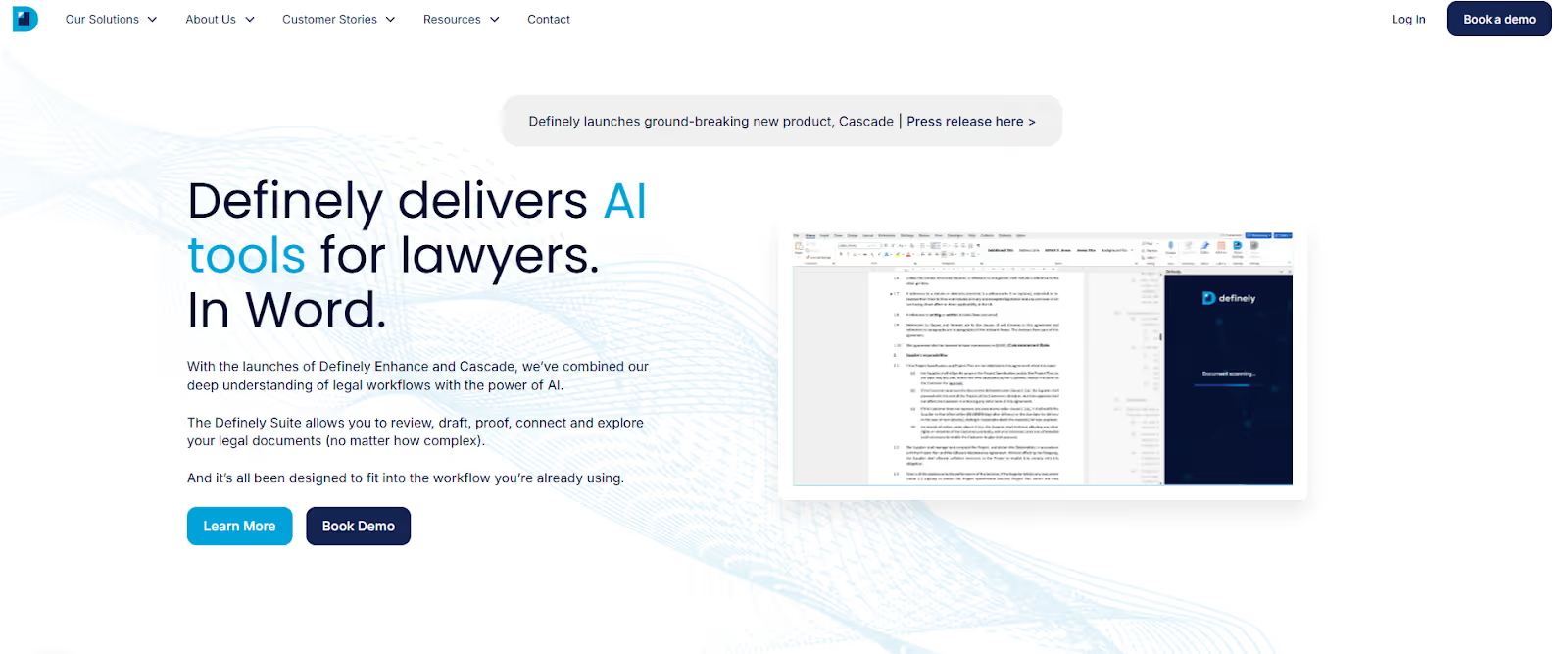
Definely is built for lawyers working on complex, high-risk legal work where structure, context, and accuracy matter. It operates natively inside Microsoft Word and supports drafting, review, and negotiation across long agreements, schedules, and linked documents.
Rather than treating legal work as a generic text problem, Definely applies AI directly to the tasks lawyers perform inside contracts. The focus is on helping lawyers understand what they are working on, navigate complexity, and make better decisions at the point where legal risk is highest.
Definely stands out because it delivers a complete, production-ready legal AI workflow rather than a set of disconnected AI features. Its AI is embedded into real drafting and review tasks and is designed to reduce cognitive load, surface risk, and improve accuracy, while keeping lawyers fully in control of outcomes.
This makes Definely particularly well suited to complex contracts and negotiated legal work where errors carry real commercial and reputational consequences.
Enterprise pricing based on modules, deployment model, and organisational requirements.
Best for general legal AI assistance

Harvey is a general-purpose legal AI assistant used by law firms and in-house legal teams for research, drafting support, and exploratory legal analysis. It is designed to help lawyers work faster on knowledge-heavy tasks such as summarisation, issue spotting, and early-stage drafting.
Harvey is not built around specific legal workflows in the way drafting or contract review platforms are, but instead acts as a broad AI assistant across many legal use cases.
Harvey is widely adopted as an entry point to legal AI because of its flexibility and breadth. It performs well for research and exploratory work, but is less specialised when it comes to workflow-embedded legal tasks such as negotiated contract drafting or in-document review.
Enterprise subscription pricing, typically based on organisation size and usage.
Best for authoritative legal research

LexisNexis is a long-established legal research provider that combines authoritative legal content with AI-powered research and drafting support. Its AI capabilities are primarily focused on helping lawyers find, analyse, and apply legal information more efficiently.
LexisNexis plays a central role in research-led legal work rather than hands-on drafting or negotiation workflows.
LexisNexis remains a cornerstone of legal research. Its AI tools are particularly valuable where accuracy, authority, and confidence in sources matter most. It is less focused on live contract drafting or workflow-embedded legal tasks.
Tiered subscription pricing based on content access and feature set.
Best AI-enhanced legal research ecosystem
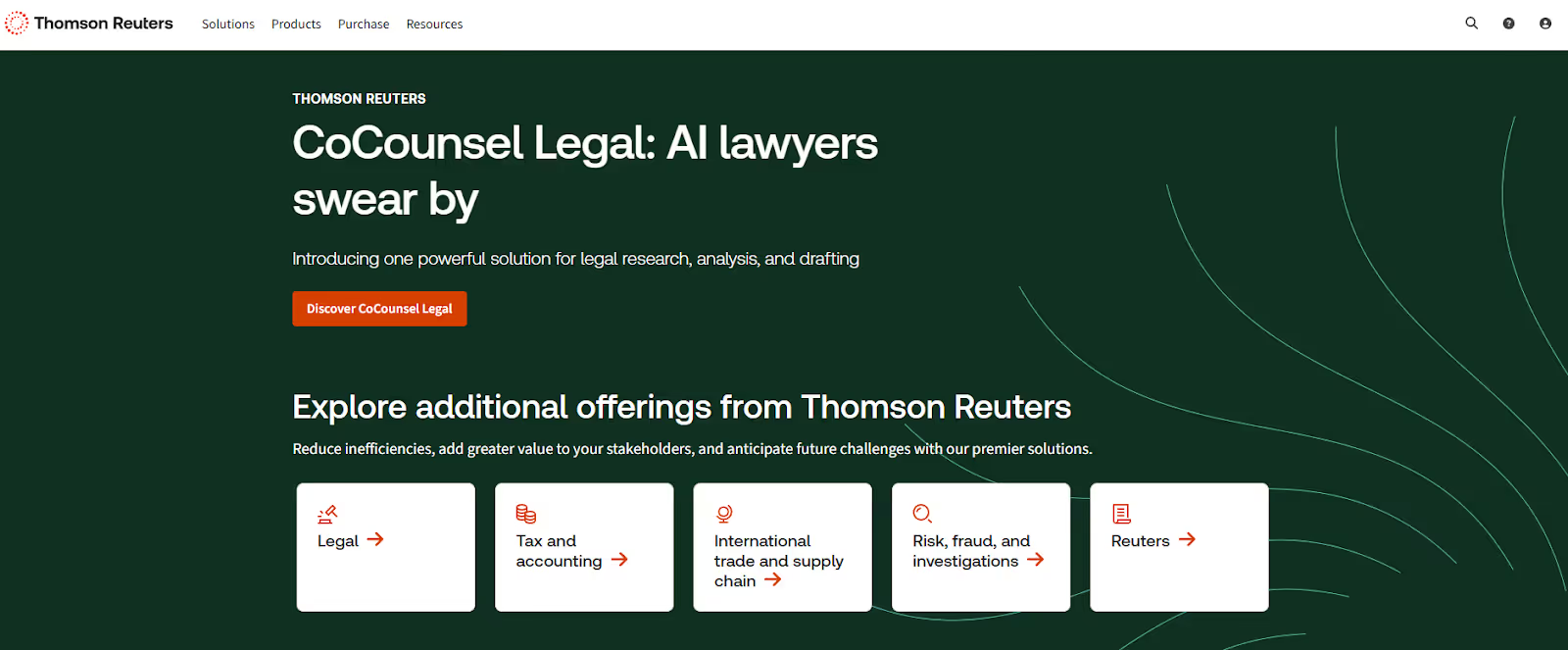
Thomson Reuters provides a broad legal research and content ecosystem that integrates AI across platforms such as Westlaw and Practical Law. Its AI capabilities are primarily designed to help lawyers research the law, understand legal issues, and access curated guidance more efficiently.
The platform is research and content led rather than focused on live drafting or negotiation workflows.
Thomson Reuters is particularly strong for organisations that rely heavily on structured legal research and guidance. Its AI enhancements improve speed and comprehension, but the platform is not designed around end-to-end legal workflows inside contracts.
Subscription-based pricing, typically tiered by product and access level.
Best for fast drafting suggestions
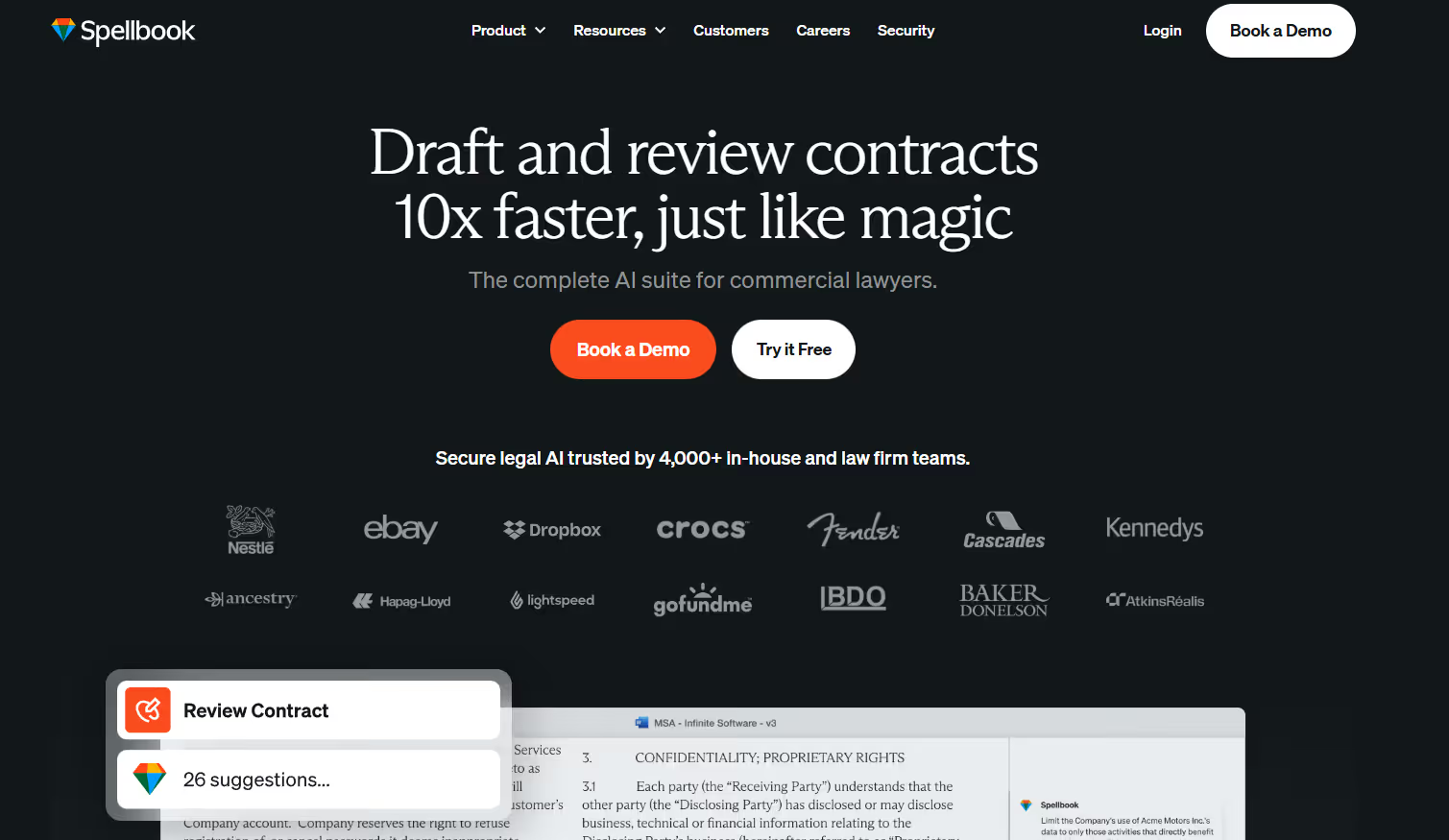
Spellbook is an AI-powered drafting tool designed to help lawyers generate and refine contract language inside Microsoft Word. It focuses on providing clause suggestions and alternative wording to speed up drafting, particularly in the early stages of document creation.
Spellbook is drafting-first and generation-led rather than focused on deeper legal workflows.
Spellbook is useful for lawyers who want quick drafting assistance and idea generation. It performs well for straightforward drafting tasks but is less suited to complex, negotiated agreements that rely heavily on structure, precedent, and cross-document consistency.
Lower-cost subscription pricing compared to enterprise drafting platforms.
Best emerging legal AI platform

Legora is an emerging legal AI platform focused on task-based assistance and productivity for legal teams. It is designed to help lawyers automate and accelerate discrete legal tasks such as summarisation, analysis, and information retrieval.
Legora is AI-native and assistant-led rather than built around deeply embedded legal workflows.
Legora represents the next generation of legal AI platforms that focus on modular, task-level support. It is well suited to experimentation and productivity gains, but is less proven in complex, end-to-end legal workflows.
Enterprise pricing, typically based on usage and deployment.
Best for drafting quality and standardisation

Litera provides a suite of tools focused on improving drafting quality, consistency, and document hygiene across large legal teams. Its products are widely used by law firms to support proofreading, document comparison, and standardised drafting practices.
Litera’s strength lies in document quality and standardisation rather than AI-driven legal workflows.
Litera is a strong choice for organisations that prioritise consistent drafting standards and document quality at scale. Its tools help reduce errors and enforce firm-wide practices, even though AI plays a more supporting role.
Enterprise pricing, typically bundled across multiple products and modules.
Best for transactional precedent insight

DraftWise is a legal AI tool designed to help transactional lawyers understand how contract clauses have been drafted in prior deals. It analyses precedent to surface patterns, variations, and market practice, supporting more informed drafting decisions during transactions.
DraftWise focuses on insight into precedent rather than managing end-to-end drafting or negotiation workflows.
DraftWise is particularly valuable for transactional teams that rely heavily on precedent and want visibility into how similar clauses have been used historically. It complements drafting workflows rather than replacing them.
Mid-range enterprise pricing, typically based on team size and data scope.
Most legal AI tools apply intelligence broadly. They generate text, summarise information, or automate discrete tasks. That can be useful, but it often leaves lawyers doing the hardest part themselves: understanding complex documents, navigating structure, and assessing the impact of change.
Definely takes a more surgical approach to legal AI. Instead of spreading AI across every task, it applies it precisely where legal risk and cognitive load are highest. Drafting, reviewing, and negotiating complex contracts inside Microsoft Word.
This difference matters. Legal work is not a volume problem. It is a precision problem.
Legal AI delivers the most value when it reduces effort without introducing new risk. Tools that operate outside core workflows can speed up research or automate isolated tasks, but they rarely change how lawyers work on high-stakes matters.
Definely is designed to support the work lawyers actually do when accuracy matters most. By applying AI with precision inside the contract itself, it helps lawyers navigate complexity, understand impact, and make better decisions without removing judgement from the process.
For legal teams dealing with complex, negotiated agreements, this focused approach is more valuable than broad, generic AI capability.
Legal AI in 2026 is best understood as a stack, not a single purchase. Different tools play different roles across research, drafting, analysis, and productivity.
For complex legal work where accuracy, context, and judgement matter most, Definely stands apart. By applying AI with surgical precision inside real legal workflows, it is the strongest legal AI platform available today.
Get started with Definely: Book a demo
Legal AI tools are used to support tasks such as contract drafting, contract review, legal research, document analysis, and day-to-day legal productivity. Different tools apply AI to different parts of legal work, and most legal teams use more than one tool depending on the task.
No. Legal AI works best as a stack rather than a single solution. Research tools, drafting tools, analysis tools, and general AI assistants each solve different problems. Attempting to use one tool for everything usually results in shallow capability where depth is required.
Legal AI tools are trained, designed, and constrained for legal work. They are built to handle legal language, structure, risk, and professional standards, and often include safeguards around accuracy, explainability, and data handling that general AI tools do not provide.
Some are, some are not. Enterprise-grade legal AI tools offer security controls, data handling assurances, and deployment options suitable for regulated industries. These factors should be assessed carefully before adoption, particularly for sensitive or high-risk matters.
No. Legal AI tools are designed to support lawyers, not replace them. The most effective tools reduce manual effort, surface relevant information, and improve consistency, while leaving judgement and decision-making with the lawyer.
Legal teams should prioritise workflow fit, depth of capability, transparency of AI outputs, and suitability for complex legal work. Tools that integrate into existing workflows and apply AI in context tend to deliver more value than standalone or generic platforms.
Both benefit, but in different ways. Law firms often use legal AI to improve efficiency, consistency, and quality across matters, while in-house teams focus on risk management, negotiation, and handling complex commercial contracts. The highest value appears where work is complex and judgement-heavy.
AI is reducing time spent on manual tasks such as searching, cross-referencing, and repetitive drafting. The biggest impact is not automation, but improved accuracy, faster understanding of complex information, and better use of institutional knowledge.
.avif)