June 15, 2026
•
Insights
Banking and finance law is one of the most demanding areas of legal practice. Documents are long, highly structured, and deeply interconnected. Small drafting errors can carry serious legal and commercial consequences, often years after a transaction has closed.
As a result, legal software for banking and finance work needs to prioritise accuracy, consistency, and control. Tools that work well for general commercial contracts or corporate transactions often struggle when applied to complex finance documentation.
This guide compares the 6 best legal software tools for banking and finance law in 2026, focusing on drafting, review, precedent use, and document management for high-risk finance work. It intentionally excludes legal research platforms and corporate finance tools.
Legal software for banking and finance law supports the drafting, review, negotiation, and management of finance documentation such as facility agreements, security documents, guarantees, and amendments.
What distinguishes this area from other legal work is complexity. Finance transactions typically involve multiple linked documents, evolving over time through amendments and waivers. Definitions, cross-references, and schedules play a central role in risk allocation.
As a result, the most valuable tools are those that help lawyers:
This article does not cover legal research tools or corporate finance execution software. It focuses on tools that support real drafting and review work in banking and finance law.
Choosing the right software for finance law requires a different lens from general legal tech.
Banking documentation rarely stands alone. Tools must handle master agreements, schedules, security documents, and amendments as a connected set, not isolated files.
Accuracy in finance law depends on consistent definitions and correct cross-references. Software should reduce manual checking and help surface inconsistencies.
Late-stage negotiations often involve small but critical changes. The best tools help lawyers understand how amendments affect risk elsewhere in the documentation.
Drafting and negotiation happen in Microsoft Word. Tools that sit outside Word or require portal-based workflows are a poor fit for finance lawyers.
In banking law, speed without precision increases risk. Tools should support legal judgement and accuracy rather than attempt to automate decisions.
Best overall for complex banking and finance documentation inside Microsoft Word
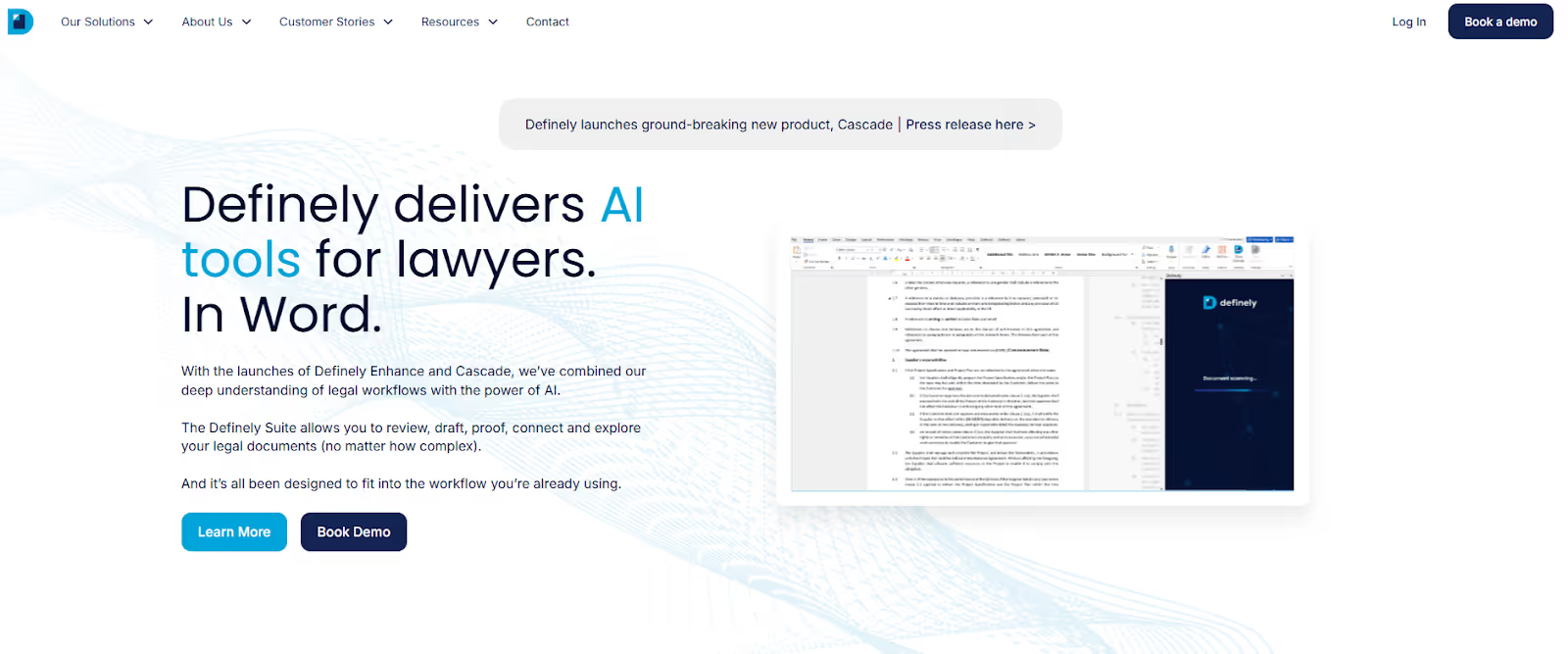
Definely is built for lawyers working on long, high-risk contracts where structure, accuracy, and context matter. It operates natively inside Microsoft Word and supports drafting, review, and negotiation across complex banking and finance documentation.
Rather than automating finance documents or generating language in isolation, Definely focuses on helping lawyers work more accurately within existing agreements. This includes navigating definitions and cross-references, maintaining consistency across related documents, and understanding how changes affect risk elsewhere in the documentation.
Banking and finance agreements are rarely standalone. Facility agreements, security documents, guarantees, and amendments form interconnected document suites that evolve over time. Many of the most serious errors occur when changes are made without full visibility into their wider impact.
Definely is designed for this reality. By reducing manual navigation and comparison work inside Word, it helps lawyers maintain accuracy across complex structures while staying in control of legal judgement. This makes it particularly well suited to negotiated finance work where precision matters more than speed alone.
Want to see how Definely can help support legal work for your team? Book a demo today.
Best for drafting quality and standardisation in banking law teams

Litera provides a suite of drafting, proofreading, and document comparison tools that are widely used across large law firms. Its products are designed to improve document quality, consistency, and compliance with firm drafting standards.
In banking and finance practices, Litera is most commonly used to support document hygiene, enforce style and formatting rules, and manage comparisons across versions of complex documents.
Banking teams often produce high volumes of similar documents where consistency and accuracy at the surface level matter. Litera helps reduce basic drafting errors, enforce house style, and ensure documents meet internal quality standards before they are circulated or signed.
However, Litera’s tools are focused on document quality rather than legal structure. They do not deeply analyse how definitions interact across documents or how negotiated changes affect risk elsewhere in a finance transaction. As a result, Litera is typically most effective when used alongside tools that support substantive drafting and review decisions.
Best for precedent analysis in finance transactions
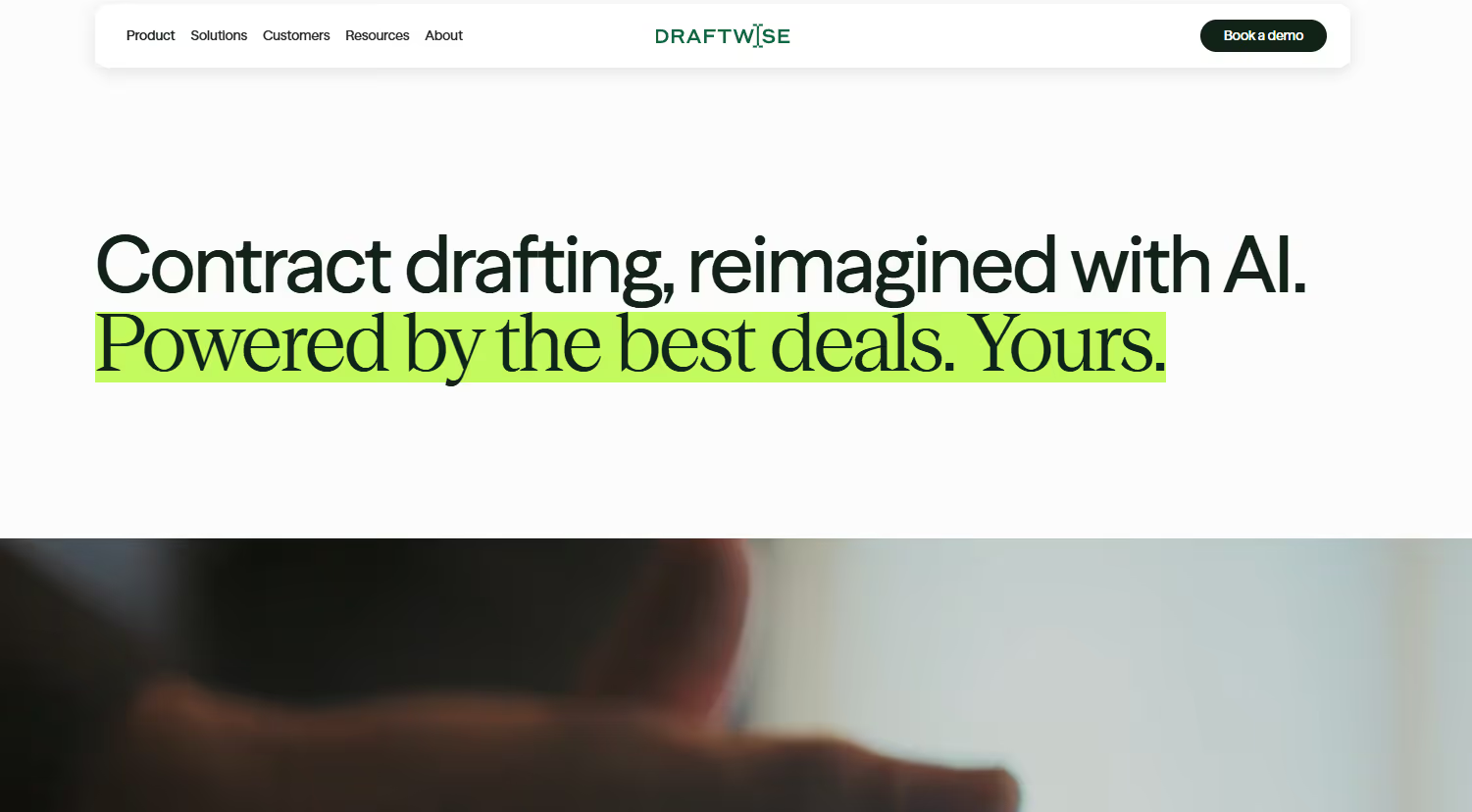
DraftWise is a legal technology platform focused on analysing and comparing contractual precedent. It allows lawyers to review how clauses have been drafted in previous agreements and identify patterns across a firm’s historical deal data.
In banking and finance practices, DraftWise is typically used during transaction preparation to understand prior positions, market norms, and drafting variations in finance documentation.
Precedent plays a central role in banking and finance work. Lawyers frequently need to understand how particular clauses have been negotiated in past facility agreements, security documents, or amendments.
DraftWise supports this by surfacing relevant historical language and highlighting how clauses have varied across deals. This can be particularly useful at the outset of a transaction or when assessing whether proposed language departs from prior practice.
That said, DraftWise focuses on precedent analysis rather than live drafting or review. It does not operate as an in-document workflow tool and does not manage definition consistency or change impact across active finance documents. As a result, it is most effective as a preparatory or reference tool rather than a primary drafting platform.
Best for AI-assisted contract analysis in finance matters
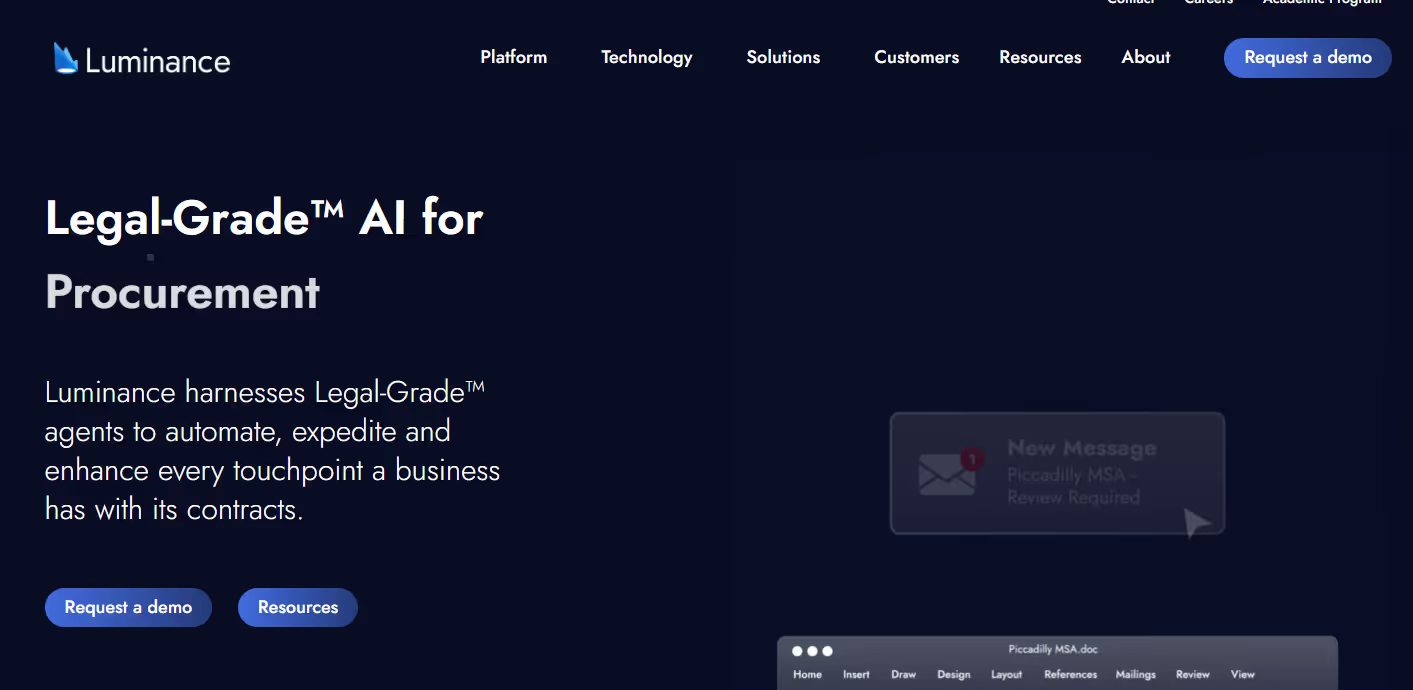
Luminance is an AI-powered contract analysis platform commonly used for document review, due diligence, and large-scale contract analysis. It applies machine learning to identify patterns, extract information, and flag anomalies across large sets of documents.
In banking and finance contexts, Luminance is most often used to analyse loan portfolios, security documents, or legacy agreements rather than to support live drafting or negotiation.
Banking and finance work often involves reviewing large volumes of existing documentation, particularly in refinancing, restructuring, or portfolio transactions. Luminance is well suited to these scenarios, where speed and consistency in analysing many documents are critical.
Its strength lies in surfacing patterns and issues across document sets. However, Luminance operates primarily outside Microsoft Word and is not designed to support clause-by-clause drafting, definition handling, or change-impact analysis during negotiation. As a result, it is best viewed as an analysis and review tool rather than a drafting platform for active finance deals.
Best document management system for banking and finance legal teams
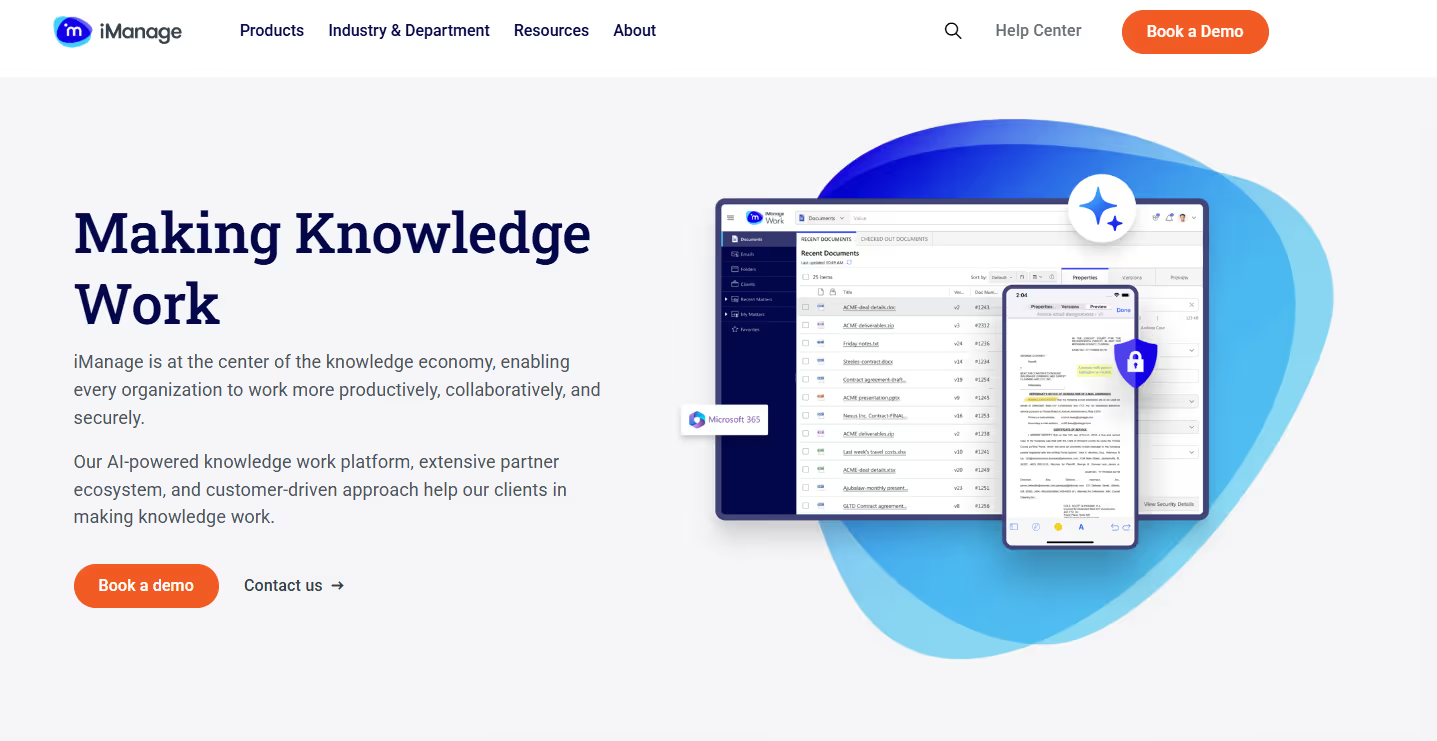
iManage is one of the most widely used document management systems in law firms and financial institutions. It provides secure document storage, version control, matter-based organisation, and access controls, all of which are critical in banking and finance legal work.
iManage also offers AI-assisted search and classification features designed to improve findability and governance across large document estates.
Banking and finance matters generate large volumes of sensitive documentation that must be stored, versioned, and accessed with precision. iManage performs this system-of-record role extremely well, giving teams confidence that documents are properly controlled and auditable.
Its AI capabilities help lawyers locate relevant documents more efficiently, but iManage is not designed to support live drafting or negotiated review inside Microsoft Word. As a result, banking teams typically rely on iManage as the backbone for document management while using additional tools to support accuracy, consistency, and change management during drafting and negotiation.
Best cloud-based document management system for finance law workflows
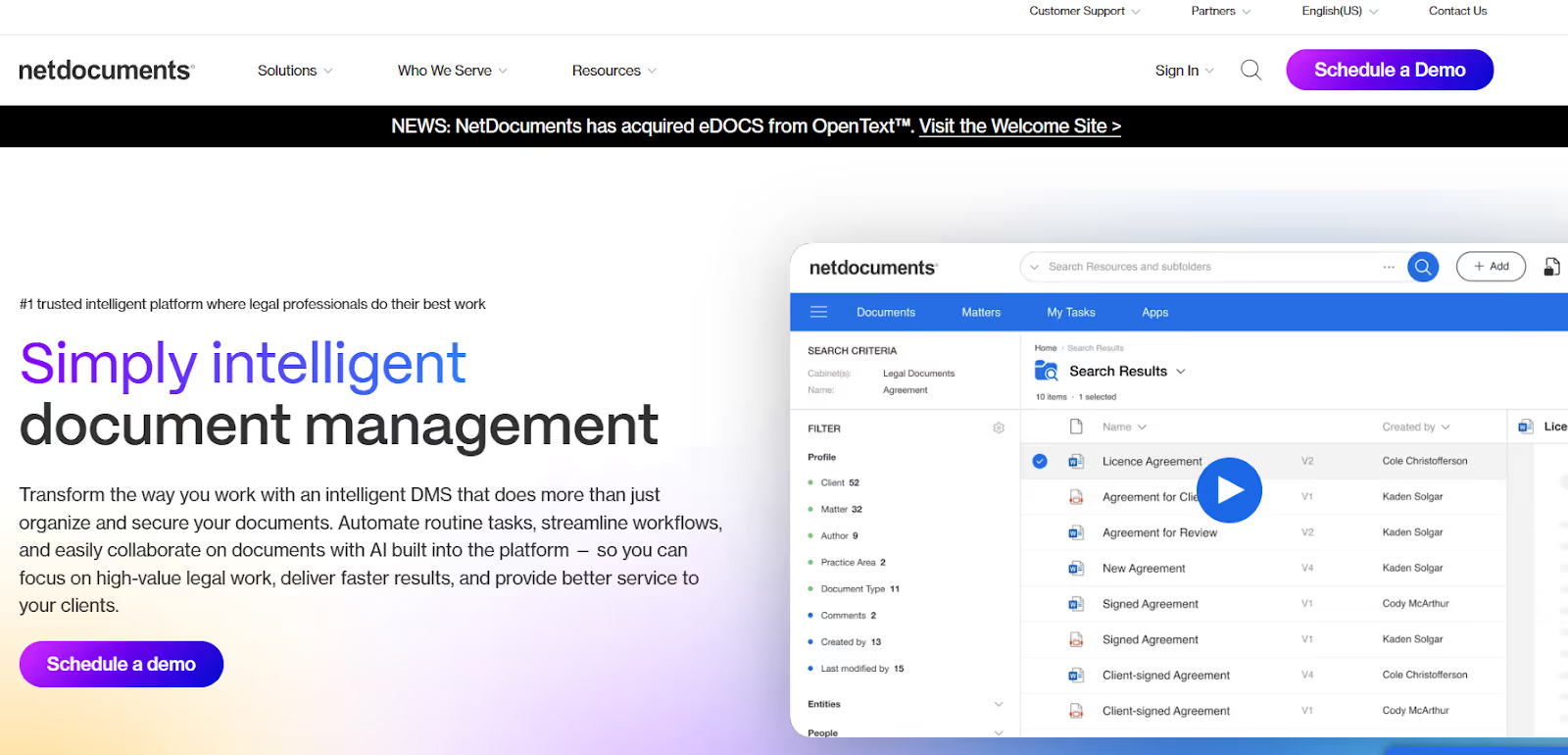
NetDocuments is a cloud-native document management system designed for law firms and in-house legal teams. It provides secure document storage, version control, matter-centric organisation, and access controls, delivered through a cloud-first architecture.
NetDocuments also incorporates AI-assisted search and classification features to improve how users locate and manage documents within large legal repositories.
Banking and finance teams increasingly require secure access to documents across offices, jurisdictions, and remote environments. NetDocuments supports this need with a modern cloud platform that maintains strong governance and compliance controls.
Its AI features help improve document retrieval within the repository, which is valuable when managing large volumes of finance documentation. However, like other DMS platforms, NetDocuments is focused on document management rather than drafting or negotiated review. It does not natively support clause-level analysis, definition consistency, or change-impact visibility during live finance negotiations. For this reason, it is typically used as the system of record alongside tools that support precision drafting and review inside Microsoft Word.
Most legal software addresses individual parts of the banking and finance workflow. Document management systems focus on storage and governance. Drafting tools improve consistency and formatting. Precedent platforms help lawyers understand prior deal positions. Each of these plays a useful role.
What is less common is software designed to support the core task of banking and finance law: drafting and reviewing long, highly structured agreements that sit within a wider suite of interconnected documents.
In finance work, many of the most serious errors are not obvious drafting mistakes. They arise when definitions are used inconsistently, when cross-references break, or when changes are made without understanding their effect on related agreements. These are structural problems, not surface-level issues.
Definely is built around this reality. By operating inside Microsoft Word and reducing the manual navigation and comparison work that creates cognitive overload, it helps lawyers maintain accuracy across complex document structures. Its focus on consistency and change impact supports the level of precision that banking and finance law demands, without taking control away from legal judgement.
Banking and finance law requires legal software that prioritises accuracy, structure, and risk control. Tools that work well in other practice areas often fall short when applied to complex finance documentation.
For teams handling high-risk banking and finance work, Definely is the strongest overall platform in 2026, supported by complementary tools for precedent, analysis, and document management.
Get started with Definely. Book a demo.
Banking and finance legal work involves long, highly structured agreements that are legally and commercially interconnected. Software that works for general commercial contracts often lacks the depth needed to handle definitions, cross-references, amendments, and multi-document structures common in finance transactions.
Many errors in finance documentation are structural rather than obvious. They often involve inconsistent definitions, broken cross-references, or changes that affect risk elsewhere in a document suite. These issues are difficult to spot manually, especially under time pressure.
Yes, when it is applied correctly. AI is most effective when it reduces manual navigation and comparison work, helping lawyers see how provisions interact and how changes affect related documents. This improves accuracy without replacing legal judgement.
Drafting, negotiation, and execution of finance documents happen in Microsoft Word. Tools that operate outside Word introduce friction and increase the risk of context loss. Word-native software allows lawyers to review and apply insights directly where they are working.
Full automation is rarely appropriate for complex finance agreements. Banking and finance law requires careful judgement and negotiation. Software should support precision and consistency rather than attempt to automate decision-making.
Most teams use a combination of systems. Document management platforms provide governance and storage. Precedent and analysis tools support preparation and review. Drafting and review tools operate inside Word to manage accuracy and change during negotiation. The value comes from how well these tools work together.
In-house teams should prioritise accuracy, consistency, and risk control. Tools that help manage change impact, maintain definition consistency, and reduce manual checking are more valuable than tools focused purely on speed or volume.
.avif)