
June 15, 2026
•
Insights
Document management systems have long been the backbone of legal and enterprise workflows. What has changed is not the need for a system of record, but how documents are found, understood, and reused in practice.
In 2026, the most effective document management systems are no longer passive repositories. They use AI to reduce friction, improve findability, and help users work with documents in context. For legal teams, this shift matters because accuracy, speed, and risk all depend on how easily the right information can be surfaced at the right moment.
This guide compares the best AI-powered document management systems in 2026, and explains how AI layers like Definely fit alongside them to make document knowledge usable inside real legal workflows.
An AI-powered document management system stores, organises, and governs documents while using AI to improve how content is classified, retrieved, and secured.
Traditional DMS platforms focus on version control, permissions, and matter or workspace structure. AI adds capabilities such as intelligent search, automated tagging, metadata extraction, and content classification.
For legal teams, the limitation of many DMS platforms is not storage, but usability. Finding the right document, clause, or precedent often requires knowing exactly what to search for in advance. AI-powered systems help, but accuracy and efficiency still break down when documents are treated as isolated files rather than connected legal instruments.
A DMS must provide reliable storage, audit trails, access controls, and version history. AI should enhance these foundations, not compromise them. For regulated environments, governance remains non-negotiable.
AI is most valuable when it helps users retrieve relevant information without requiring precise keywords. Context, metadata, and document relationships matter far more than raw text matching.
Legal teams do not work inside document repositories. They work inside tools like Microsoft Word. The closer AI document systems are to drafting and review workflows, the more value they deliver.
Surfacing hundreds of documents is rarely helpful. The best systems reduce noise and surface what matters, lowering cognitive load rather than increasing it.
Enterprise and regulated organisations require clear data handling, deployment options, and integration models that work with existing infrastructure.
Best AI contract intelligence layer that enhances your DMS
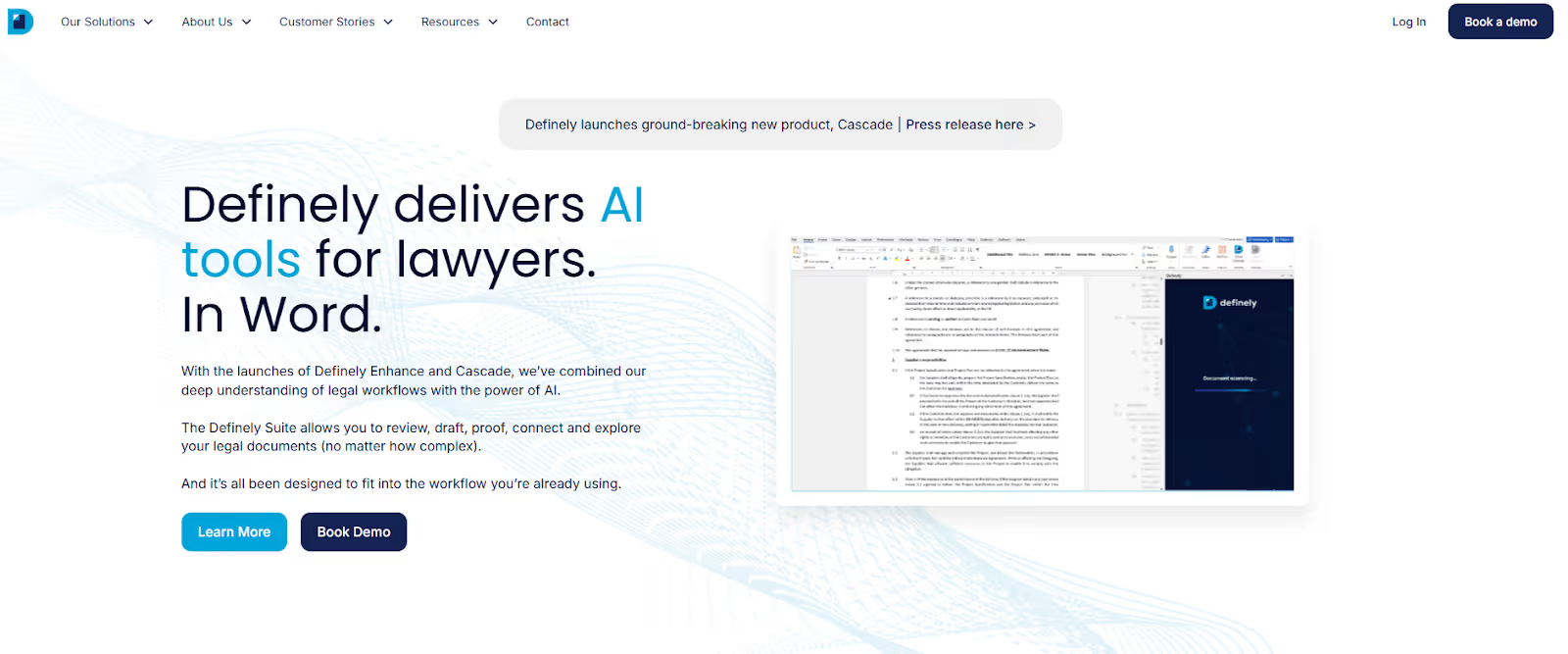
Definely is not a document management system. Instead, it works alongside the systems legal teams already use, applying AI inside Microsoft Word to make contract knowledge easier to find and reuse during drafting and review.
By integrating with platforms such as iManage, NetDocuments, and SharePoint, Definely allows lawyers to access trusted documents and legal language directly in the document they are working on, without breaking their workflow.
Most document management systems are good at storing files, but less effective at supporting real legal work. When reviewing or drafting a contract, lawyers rarely need to find a whole document. They need to find the right clause, definition, or negotiated position, quickly and in context.
Definely focuses on this moment. By applying AI with precision inside Word, it reduces the manual searching and cross-referencing that slow lawyers down and lead to mistakes. The result is more consistent drafting, more accurate review, and greater confidence in the work being done.
Best enterprise legal document management system
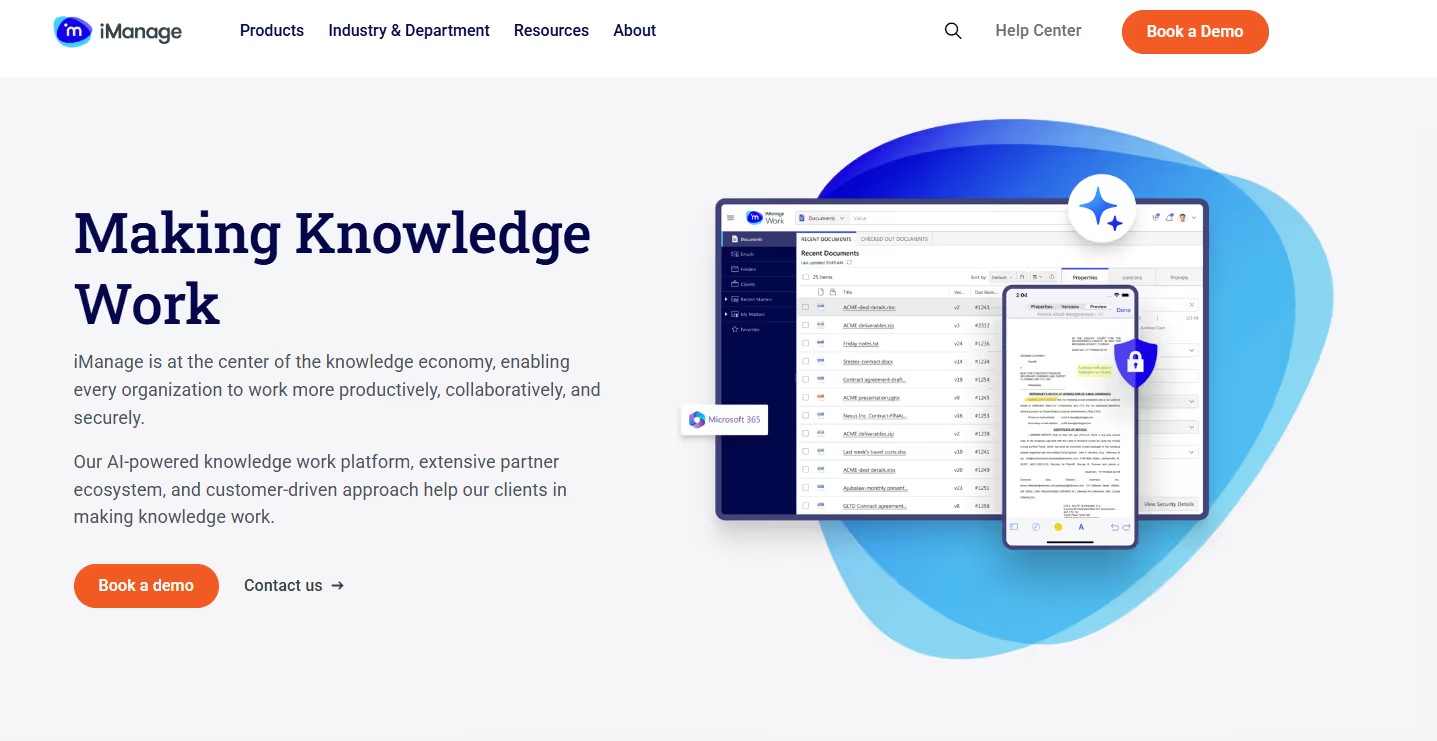
iManage is one of the most widely used document management systems in law firms and corporate legal departments. It acts as a central system of record, providing secure document storage, version control, and matter-based organisation at enterprise scale.
In recent years, iManage has added AI capabilities to improve document classification, search, and information governance across large document estates.
For large legal teams, accuracy and risk control depend on knowing that documents are stored correctly, access is controlled, and versions are reliable. iManage excels at this foundational layer. Its AI features make it easier to find relevant documents, but the platform is primarily designed to manage files rather than support live drafting or review work.
This is why iManage is often paired with workflow-level tools that help lawyers work with document content inside Microsoft Word, rather than being used as a standalone solution for contract drafting or review.
Best cloud-native legal document management system
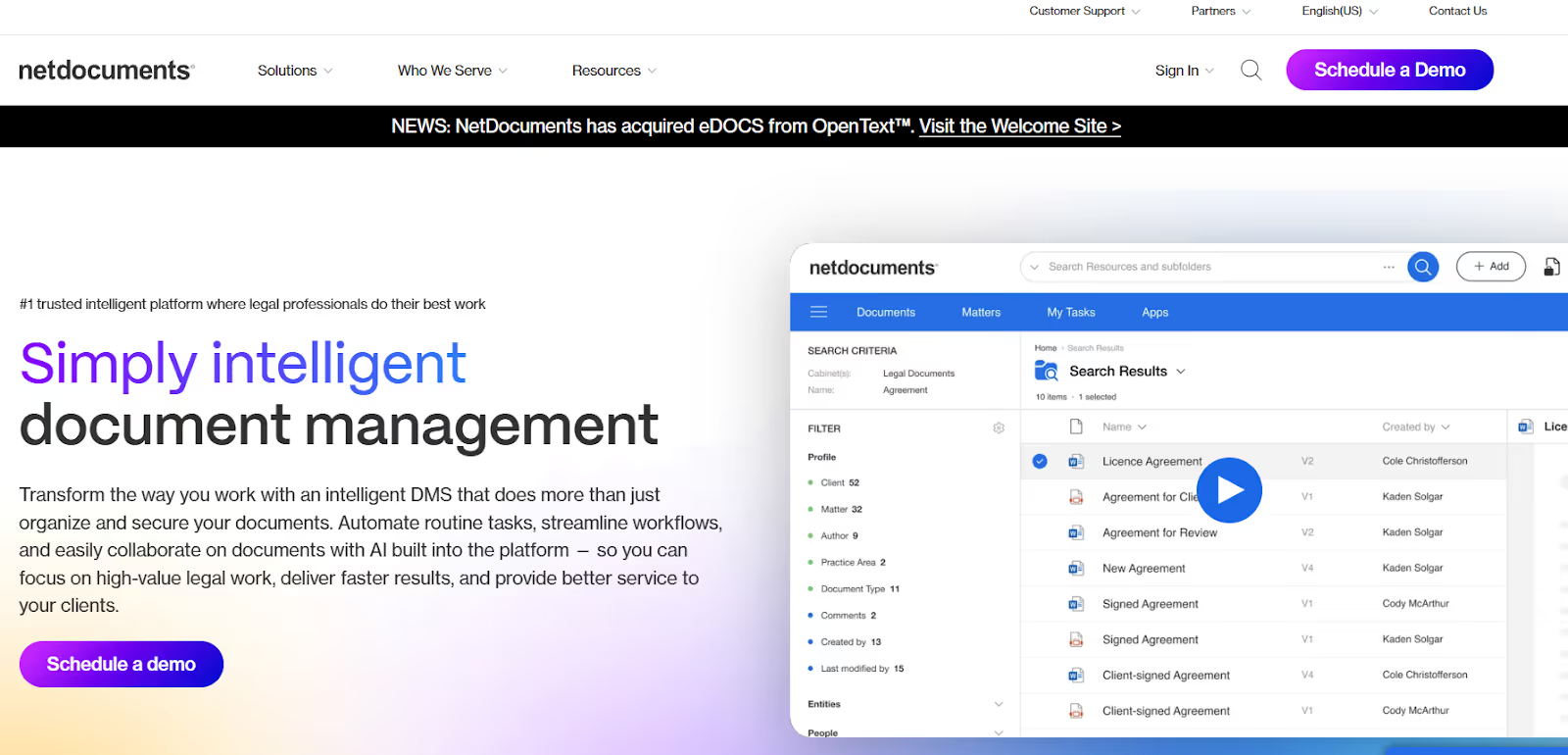
NetDocuments is a cloud-based document management system designed for law firms and in-house legal teams. It provides secure document storage, version control, and matter-centric organisation, with a strong emphasis on accessibility and scalability.
NetDocuments has incorporated AI features to improve document search, classification, and organisation within its cloud environment, helping teams manage large volumes of legal content more efficiently.
Cloud-native document management reduces infrastructure overhead and supports more flexible ways of working. For legal teams, NetDocuments offers a reliable system of record with modern security and compliance controls.
Its AI capabilities improve findability within the repository, but like most DMS platforms, NetDocuments is primarily designed to manage documents rather than support the detailed drafting and review work that happens inside Microsoft Word. As a result, it is often used alongside tools that focus on contract content and legal workflows.
Best general-purpose AI-powered document platform
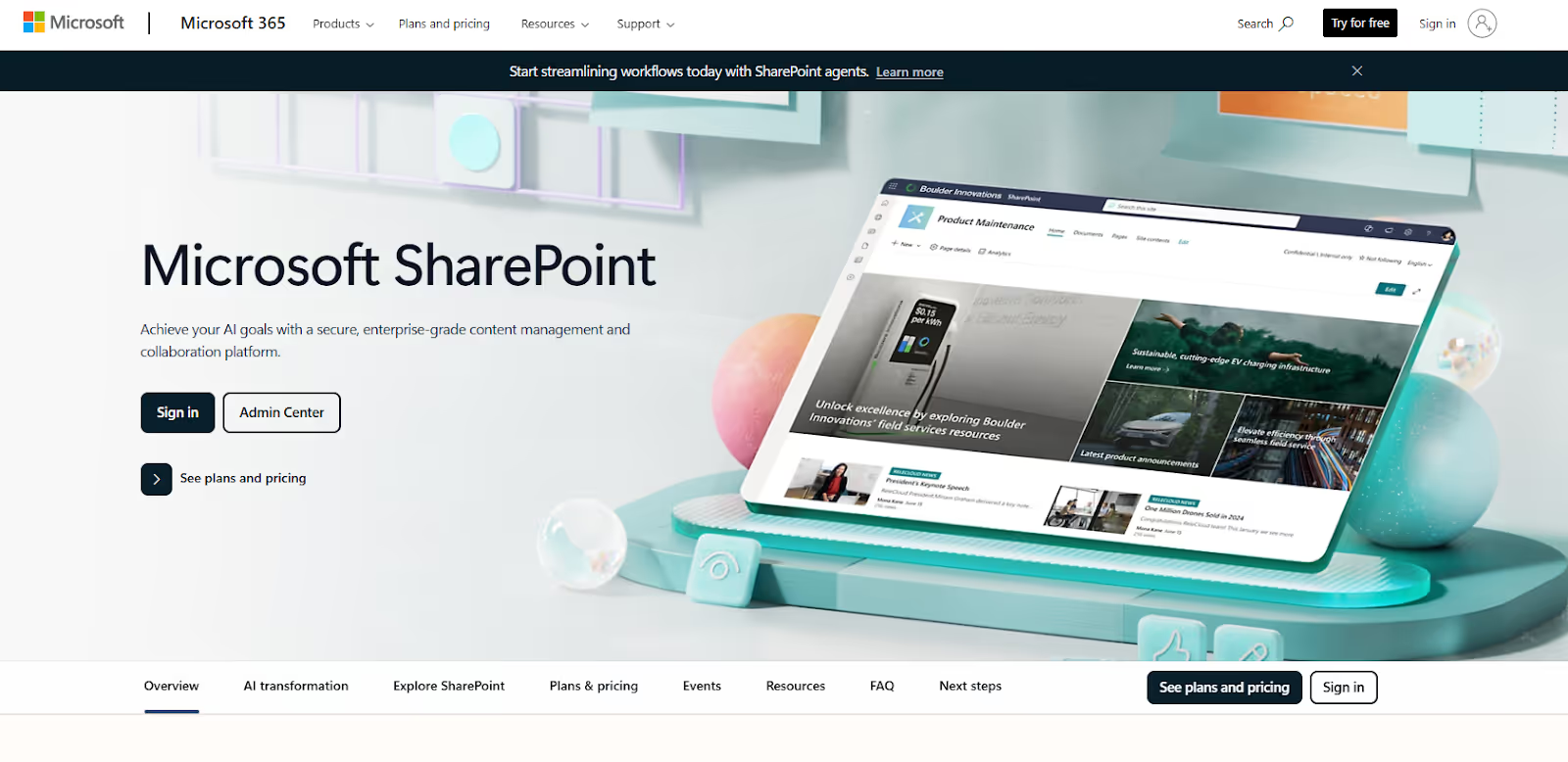
Microsoft SharePoint is a widely used document management and collaboration platform across enterprises. It provides document storage, version control, permissions, and team-based workspaces, deeply integrated with Microsoft 365.
With Microsoft’s AI capabilities, including intelligent search and Copilot features, SharePoint supports improved content discovery, collaboration, and document organisation across large document libraries.
SharePoint’s strength is flexibility and scale. For many organisations, it acts as the backbone for document storage across legal and non-legal teams alike. AI-enhanced search makes it easier to locate documents, particularly when users do not know exact file names or locations.
However, SharePoint is a general-purpose platform. While it can be configured for legal use, it does not natively understand contract structure, definitions, or negotiated legal language. Legal teams often pair SharePoint with more specialised tools when accuracy, precedent reuse, and contract-specific workflows are critical.
Best for large-scale enterprise content and information management
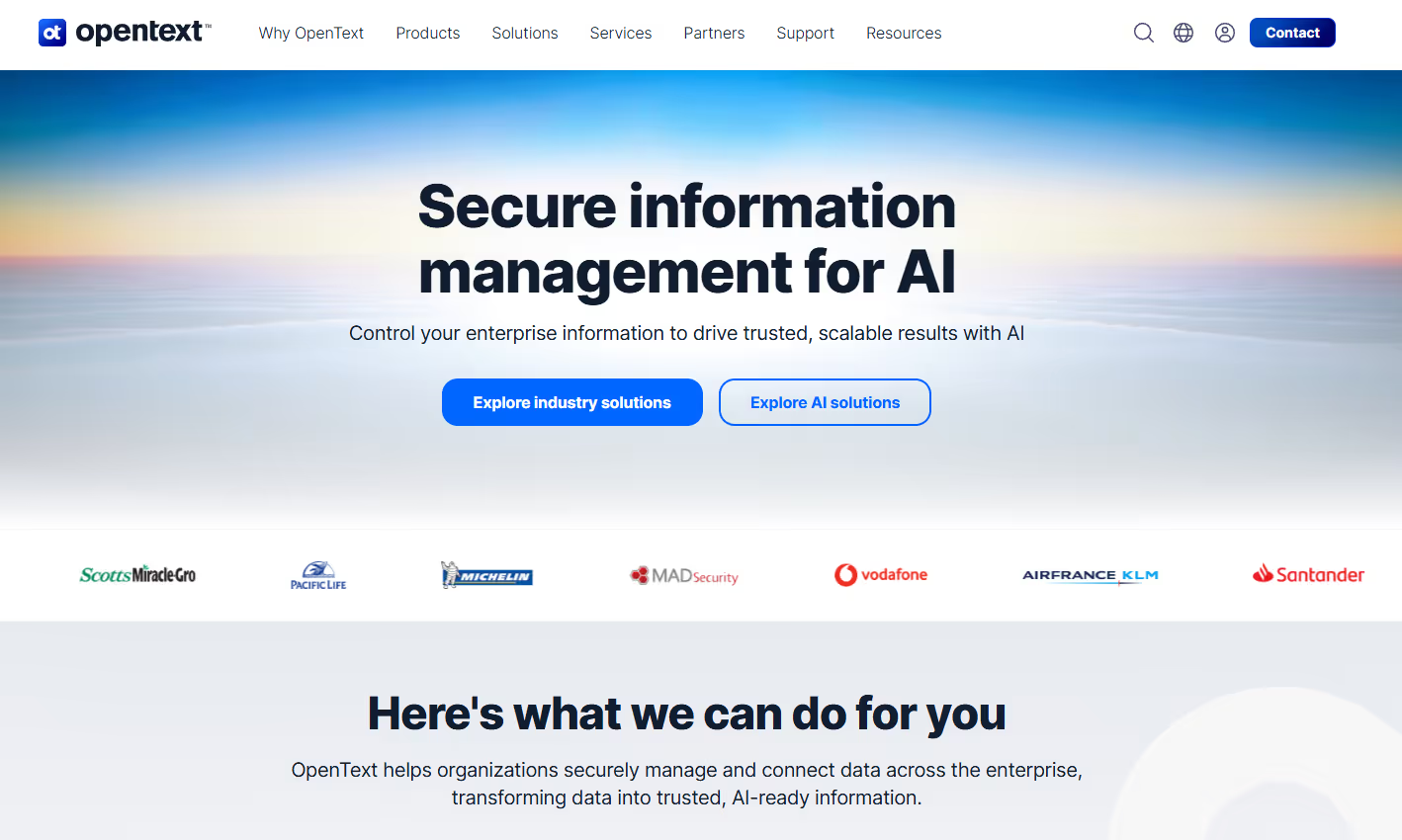
OpenText provides enterprise information management and document management solutions designed to handle large volumes of content across complex organisations. Its platforms focus on document storage, records management, compliance, and governance, with AI used to support classification, metadata enrichment, and information control.
OpenText is commonly deployed across enterprises where content spans multiple departments, jurisdictions, and regulatory requirements.
For organisations managing vast amounts of information, accuracy often depends on governance rather than drafting precision. OpenText excels at ensuring documents are classified correctly, retained appropriately, and accessed securely.
Its AI capabilities help automate classification and support compliance, but the platform is not designed around day-to-day legal drafting or contract review workflows. Legal teams typically use OpenText as a system of record and layer more specialised tools on top when they need contract-level context, precedent reuse, or in-document analysis.
Best AI-enhanced cloud content management platform
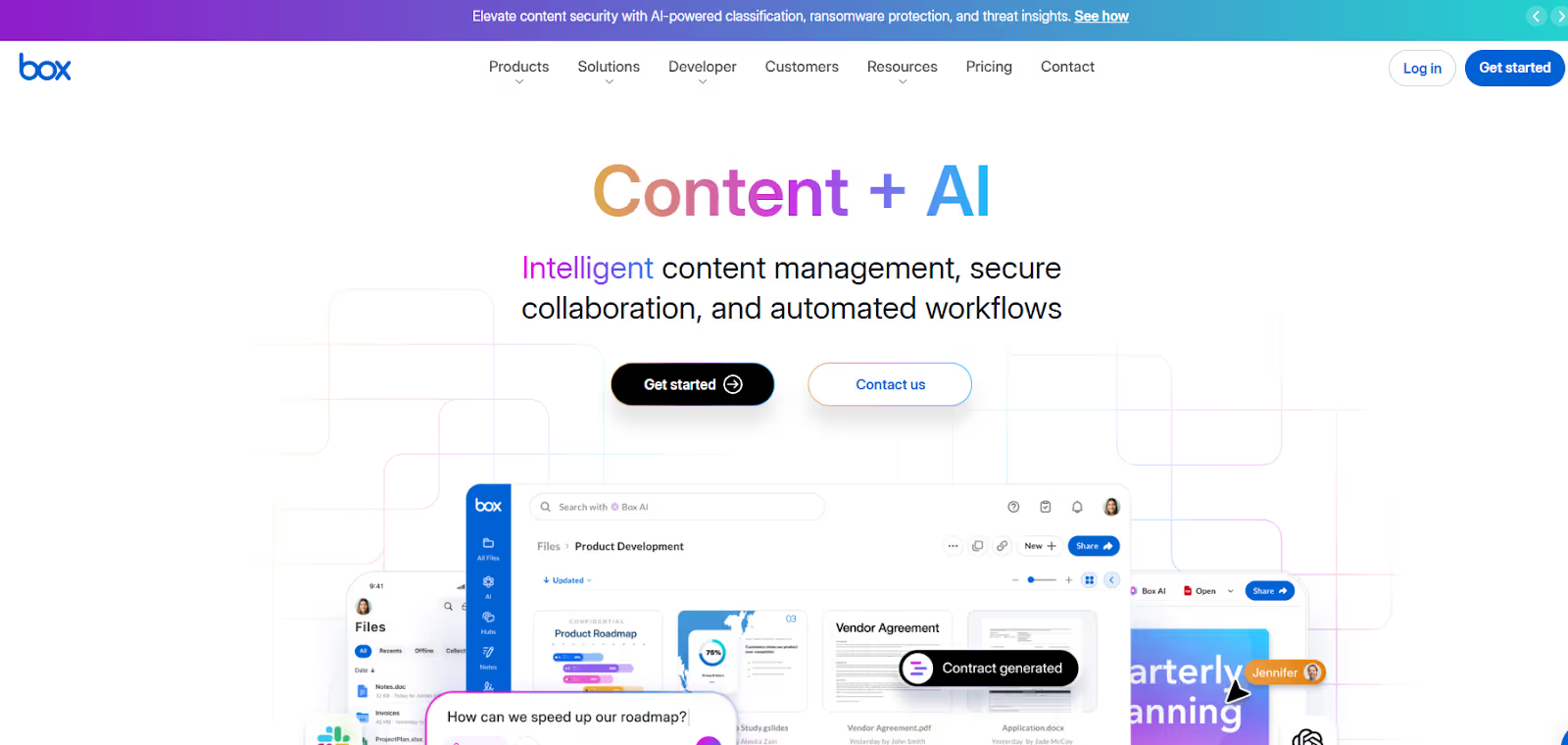
Box is a cloud-based content management platform used across many industries to store, share, and collaborate on documents securely. It combines document storage and permissions with AI-driven content intelligence to help organisations understand and manage large volumes of information.
Box is widely adopted beyond legal teams and is designed to support collaboration across departments, partners, and external stakeholders.
Box excels at making documents accessible and secure in collaborative environments. Its AI features help with content classification, search, and insight generation across large repositories, which can improve general efficiency and information visibility.
For legal teams, Box typically serves as a secure content platform rather than a legal-specific document management system. While it supports strong governance and collaboration, it does not natively understand contract structure, definitions, or negotiated legal language. As a result, legal teams often rely on additional tools to support accuracy, precedent use, and contract workflows.
Best metadata-driven AI document management system
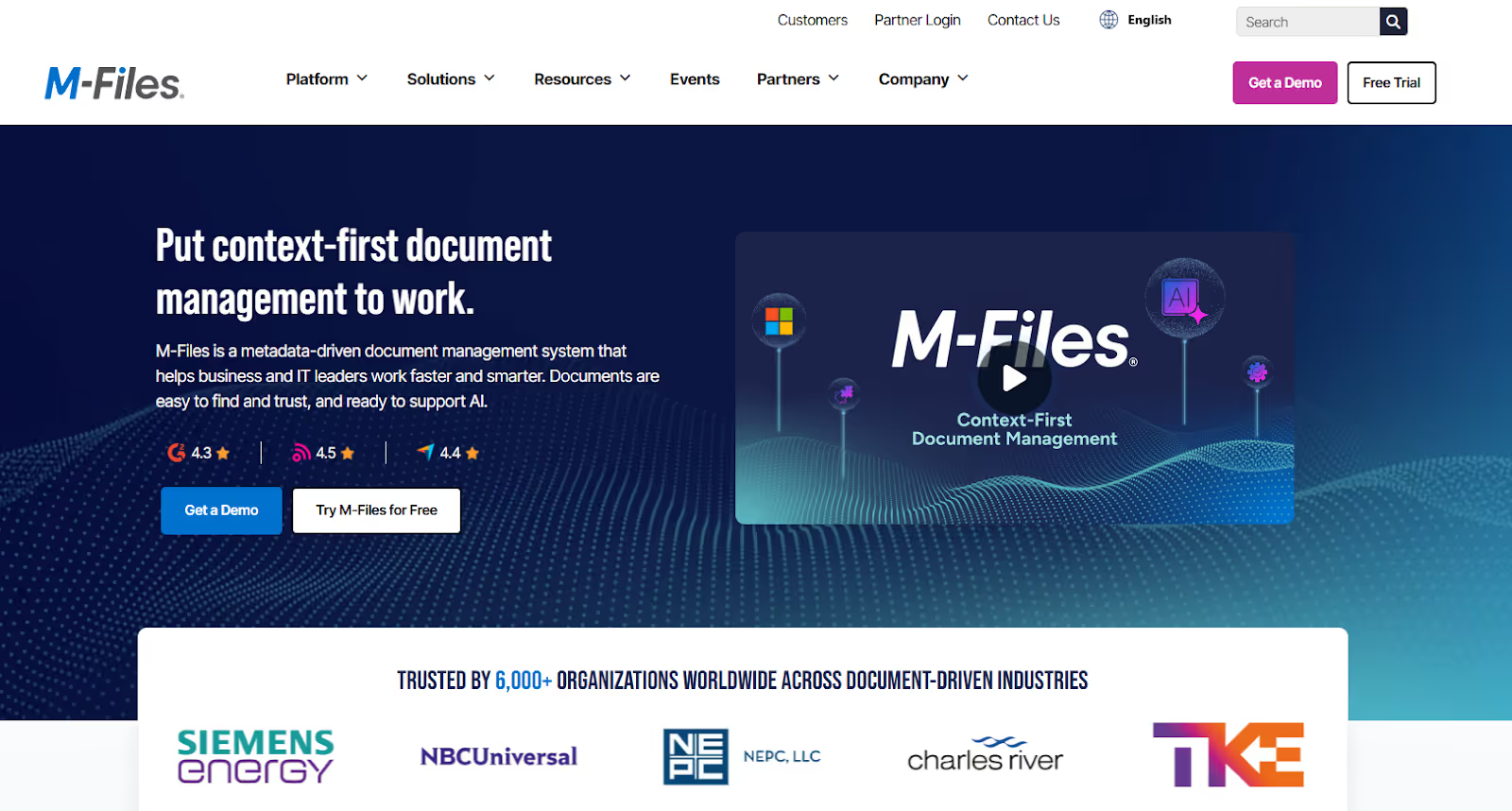
M-Files is a document management and information management platform that organises documents based on metadata rather than folder structure. Instead of relying on where a document is stored, M-Files uses AI and metadata to identify what a document is and how it should be managed.
This approach is designed to improve findability, consistency, and governance across large document sets.
Folder-based systems often break down as document volumes grow and teams work across multiple systems. M-Files addresses this by applying AI-assisted classification and metadata to keep documents organised and searchable regardless of location.
For legal teams, this can reduce friction when locating documents, but M-Files remains focused on document organisation and governance rather than the detailed drafting and review work that happens inside contracts. As with other DMS platforms, legal teams typically pair it with workflow-level tools when contract accuracy, precedent reuse, and in-document context are required.
Best secure AI-enabled content management platform
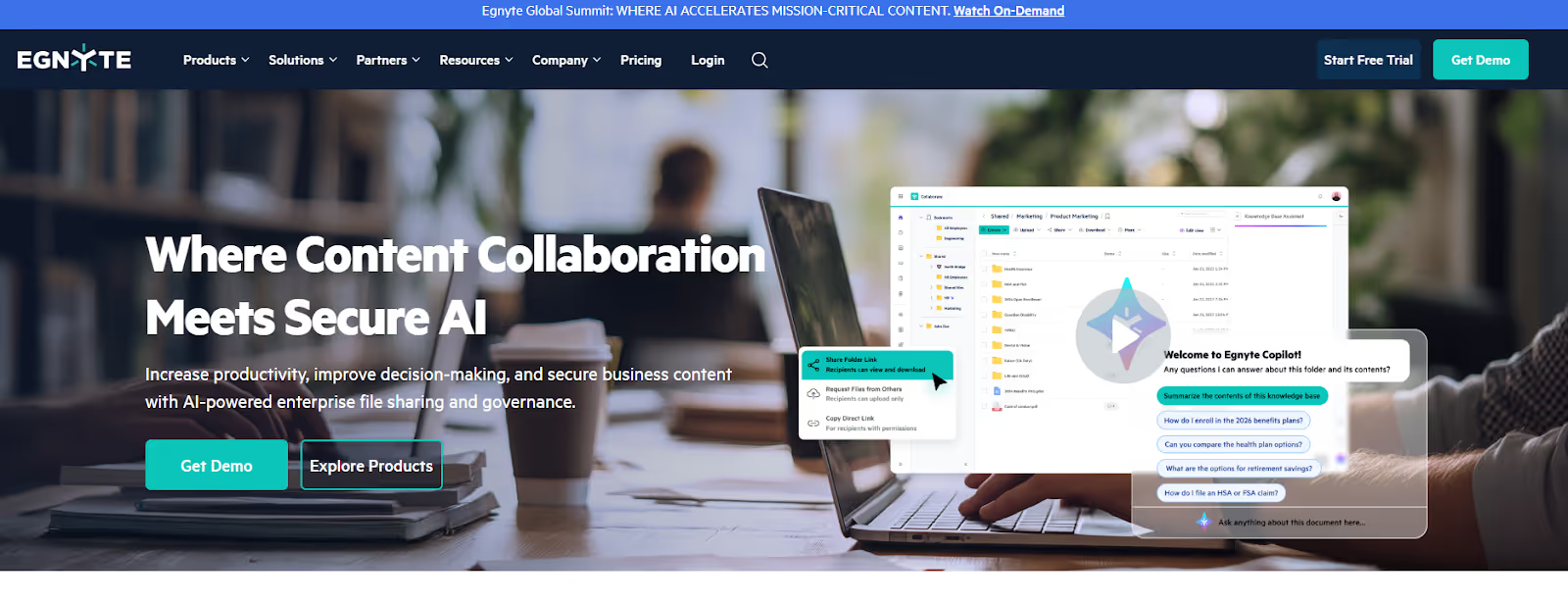
Egnyte is a cloud-based content management and data governance platform focused on secure file storage, sharing, and compliance. It combines document management with AI-driven classification and security controls to help organisations manage sensitive information across distributed environments.
Egnyte is widely used in regulated industries where data security, access control, and auditability are critical.
For organisations handling sensitive documents, accuracy often starts with security and governance. Egnyte’s AI capabilities help identify, classify, and protect content, reducing the risk of data exposure and policy breaches.
For legal teams, Egnyte typically serves as a secure content platform rather than a legal-specific DMS. While it supports strong governance and collaboration, it does not natively support contract structure, precedent use, or in-document drafting and review workflows. As a result, it is often paired with more specialised legal tools when contract accuracy and context are important.
AI-powered document management tools serve different purposes. Some act as the system of record for storing and governing documents. Others apply AI to improve how document knowledge is retrieved and used during real work.
The table below compares the leading platforms across the criteria that matter most to legal and enterprise teams in 2026.
Most AI-powered document management systems are excellent at storing and governing documents. Fewer are designed to help lawyers use document knowledge accurately during drafting and review.
This is why many legal teams pair a trusted DMS with a workflow-embedded AI layer like Definely. The combination provides both governance and precision, without forcing teams to choose between storage and usability.
AI-powered document management systems provide the system of record. Definely complements them by making the content inside those systems usable during drafting and review.
Rather than asking lawyers to search repositories, Definely brings the right contract knowledge into Microsoft Word at the point of decision. This reduces manual effort, improves accuracy, and lowers legal risk.
For most organisations, the optimal setup is not replacing a DMS, but enhancing it with precision AI.
AI has transformed document management, but storage and search alone are no longer enough. The greatest value comes from reducing cognitive load and improving how documents are used, not just where they are stored.
For legal teams, AI-powered document management works best when paired with AI layers like Definely that understand contracts in context and support real legal workflows.
Get started with Definely. Book a demo.
A traditional DMS focuses on storing documents, managing versions, and controlling access. An AI document management system uses artificial intelligence to improve how documents are classified, searched, and surfaced. The goal is not just storage, but helping users find and use the right information more efficiently.
In most cases, no. AI-powered document management typically enhances existing systems rather than replacing them. Many organisations keep a central system of record and layer AI tools on top to improve usability, retrieval, and workflow support.
AI improves retrieval by using context, metadata, and document relationships rather than relying solely on keywords. This allows users to find relevant documents even when they do not know the exact language or file name, which is particularly important for legal and contract-heavy environments.
Yes, but the value depends on how well the system supports legal workflows. Legal teams benefit most when AI helps surface relevant contracts, clauses, and related documents at the point of drafting or review, rather than requiring manual searching inside a repository.
Most enterprise-grade AI document management systems include access controls, audit trails, and compliance features similar to traditional DMS platforms. AI features are typically applied within those existing security frameworks rather than bypassing them.
Some systems can identify document types and extract metadata, but understanding contract structure and relationships often requires additional AI layers. Legal accuracy improves when AI recognises definitions, cross-references, and links between related agreements rather than treating documents as standalone files.
Organisations should prioritise integration with existing systems, reduction of manual effort, and support for real workflows. AI adds the most value when it lowers cognitive load and improves decision-making, not when it simply adds more features or data.
It is both, but the biggest long-term value is risk reduction. By improving accuracy, consistency, and access to relevant information, AI document management helps organisations avoid errors, missed obligations, and unintended consequences, especially in legal and regulated environments.
.avif)