June 15, 2026
•
Insights
M&A transactions move fast and involve large volumes of documents, multiple stakeholders, and constant time pressure. From early diligence to post-signing integration, deal teams are expected to absorb huge amounts of information without losing sight of risk.
AI is increasingly central to how modern M&A teams work. Not because it replaces judgement, but because it helps maintain accuracy and consistency when lawyers and deal teams are stretched thin.
This guide compares the 5 best AI tools to supercharge M&A in 2026, covering diligence, deal execution, drafting, and post-signing work. Each tool plays a different role across the M&A lifecycle.
AI tools for M&A support legal and deal teams across the full transaction lifecycle, from early diligence through signing and into post-deal integration. Their value lies in helping teams stay accurate and organised when the volume of information and pace of work would otherwise increase risk.
Unlike single-contract workflows, M&A transactions typically require teams to:
In this environment, risk does not come from lack of expertise. It comes from fatigue, context switching, and the difficulty of maintaining consistency across many related documents at once.
AI adds the most value where it reduces this cognitive load. The most effective tools surface what matters, help teams maintain accuracy under pressure, and support real M&A workflows rather than offering generic automation or standalone dashboards.
Different AI tools support different parts of the M&A lifecycle. The table below shows where each platform delivers the most value, so teams can quickly see how the tools compare side by side.
Most M&A teams use multiple tools together, each covering a specific phase of the transaction.
Choosing AI tools for M&A is less about finding a single platform and more about assembling the right stack. Different phases of a transaction create different risks, and the most effective tools address those risks directly.
Some tools are built for pre-signing diligence, others for deal execution, and others for post-signing drafting and integration. The first step is understanding which phase you are trying to support. Tools that claim to cover everything often do none of it particularly well.
M&A work magnifies risk through volume. Reviewing hundreds of contracts or managing dozens of parallel workstreams increases the likelihood of missed issues. AI tools should help teams stay accurate under pressure by surfacing patterns and exceptions rather than overwhelming users with more data.
The biggest source of error in M&A is not legal complexity but mental overload. Tools that reduce manual searching, repetitive comparison, and constant context switching deliver more value than tools that simply generate more output.
Legal drafting, negotiation, and review still happen in Microsoft Word. Tools that work alongside these workflows help maintain context and accuracy, while tools that require separate portals or copy-paste workflows introduce friction and risk.
No single AI tool replaces the rest of the M&A stack. The best tools integrate cleanly with data rooms, document management systems, and deal management platforms, each playing a defined role.
In high-stakes transactions, AI should support legal judgement rather than automate it. Tools that prioritise transparency, explainability, and selective use are better suited to M&A work than black-box automation.
Best for post-signing drafting and negotiated M&A work
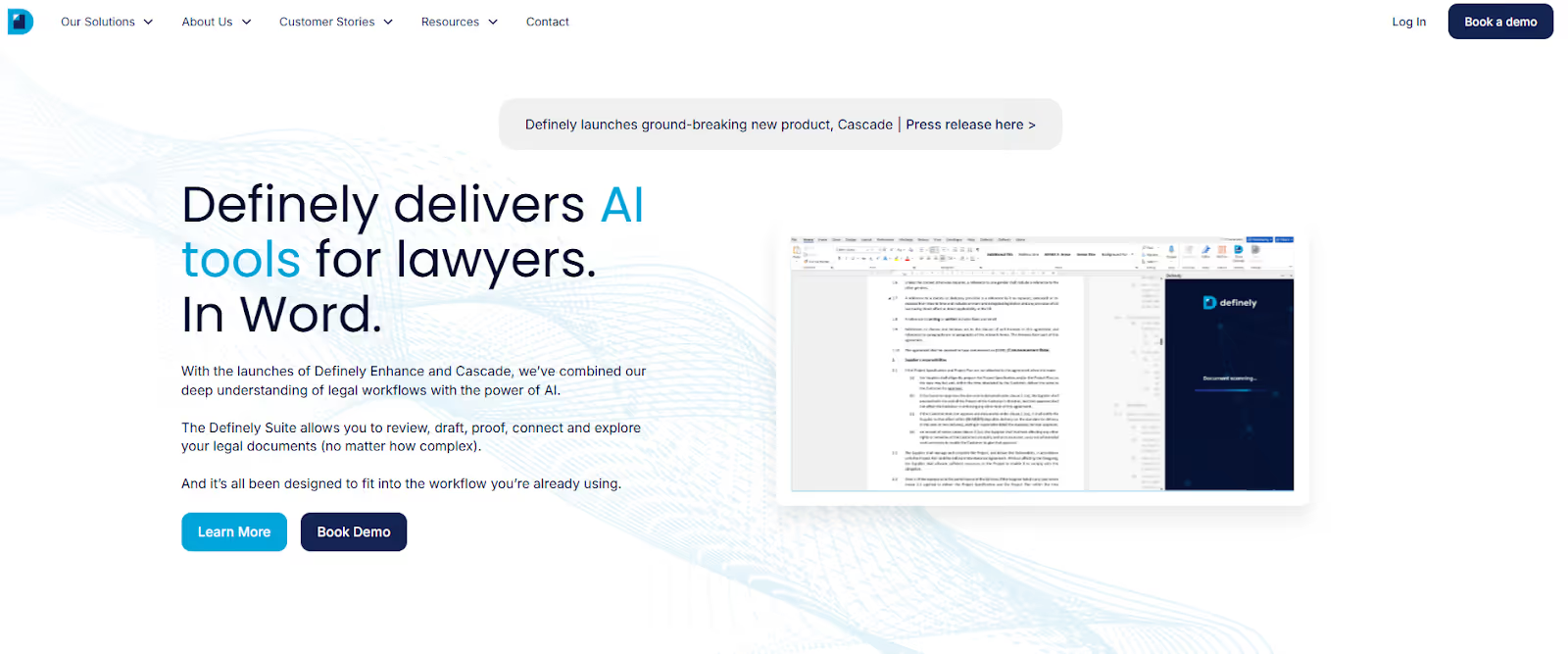
Definely is designed for lawyers working on complex, negotiated contracts where accuracy and structure matter. In M&A transactions, it is most valuable after signing, when teams are drafting and negotiating amendments, transition services agreements, integration documents, and other follow-on contracts.
Definely works natively inside Microsoft Word and supports lawyers as they navigate definitions, cross-references, and related provisions across long, interconnected agreements.
While much attention in M&A is placed on diligence, a significant amount of legal risk arises post-signing. Follow-on agreements are often drafted under intense time pressure, with lawyers juggling multiple related documents and evolving deal terms.
Definely is built for this phase. By reducing manual navigation and comparison work inside Word, it helps lawyers maintain consistency and understand how changes in one document affect others. This makes it particularly effective for negotiated M&A work where precision and control matter more than automation.
Best for AI-assisted M&A due diligence
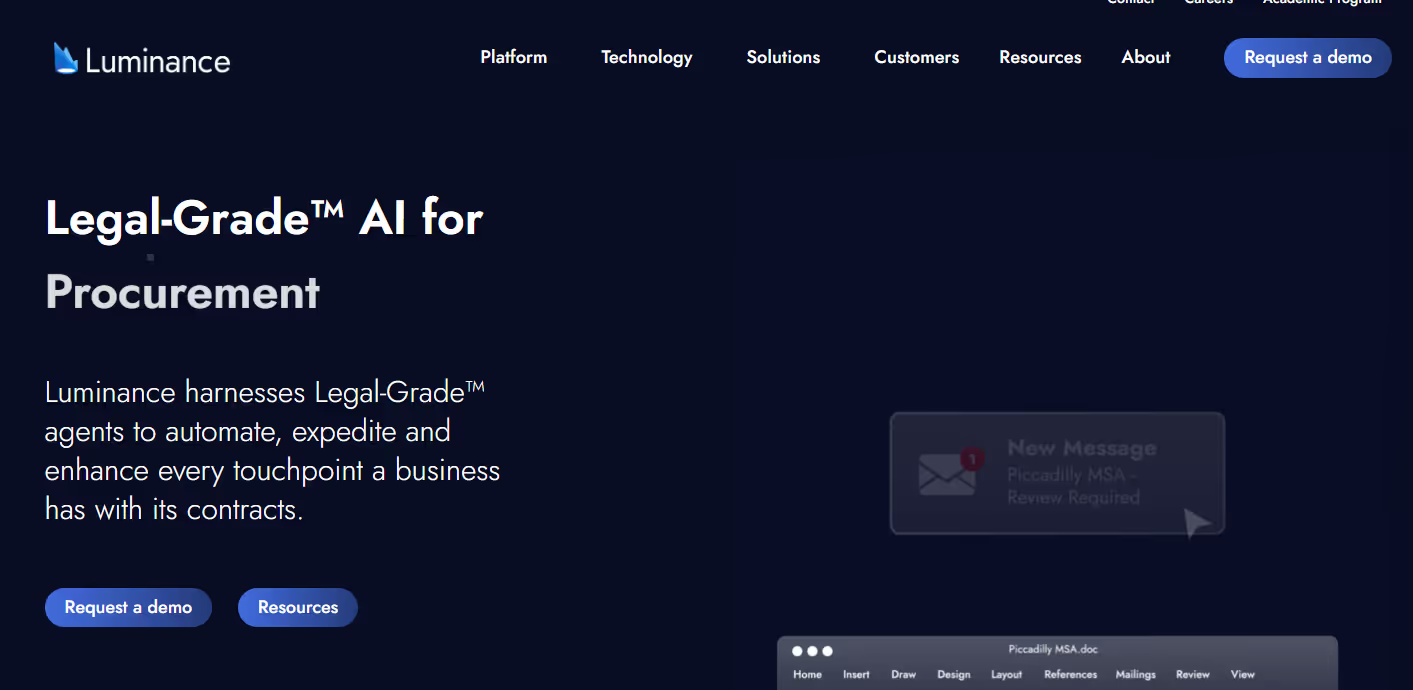
Luminance is an AI-powered contract analysis platform widely used in M&A transactions to support large-scale due diligence. It applies machine learning to review and analyse large volumes of third-party contracts, helping teams identify key provisions, patterns, and anomalies across document sets.
In an M&A context, Luminance is primarily used before signing, when speed and consistency are critical and teams are reviewing unfamiliar contracts under tight deadlines.
Pre-signing diligence often requires lawyers to review hundreds or thousands of contracts in a short period of time. Manual review at this scale increases the risk of missed issues, particularly when attention is divided across multiple workstreams.
Luminance helps mitigate this risk by surfacing relevant clauses and highlighting unusual or potentially risky provisions across a large population of documents. This allows legal teams to focus their judgement where it matters most rather than spending time on repetitive review.
Luminance is not designed for live drafting or negotiated post-signing work. It operates primarily outside Microsoft Word and is best viewed as a diligence and analysis tool rather than a drafting platform.
Best for M&A process management and post-merger integration
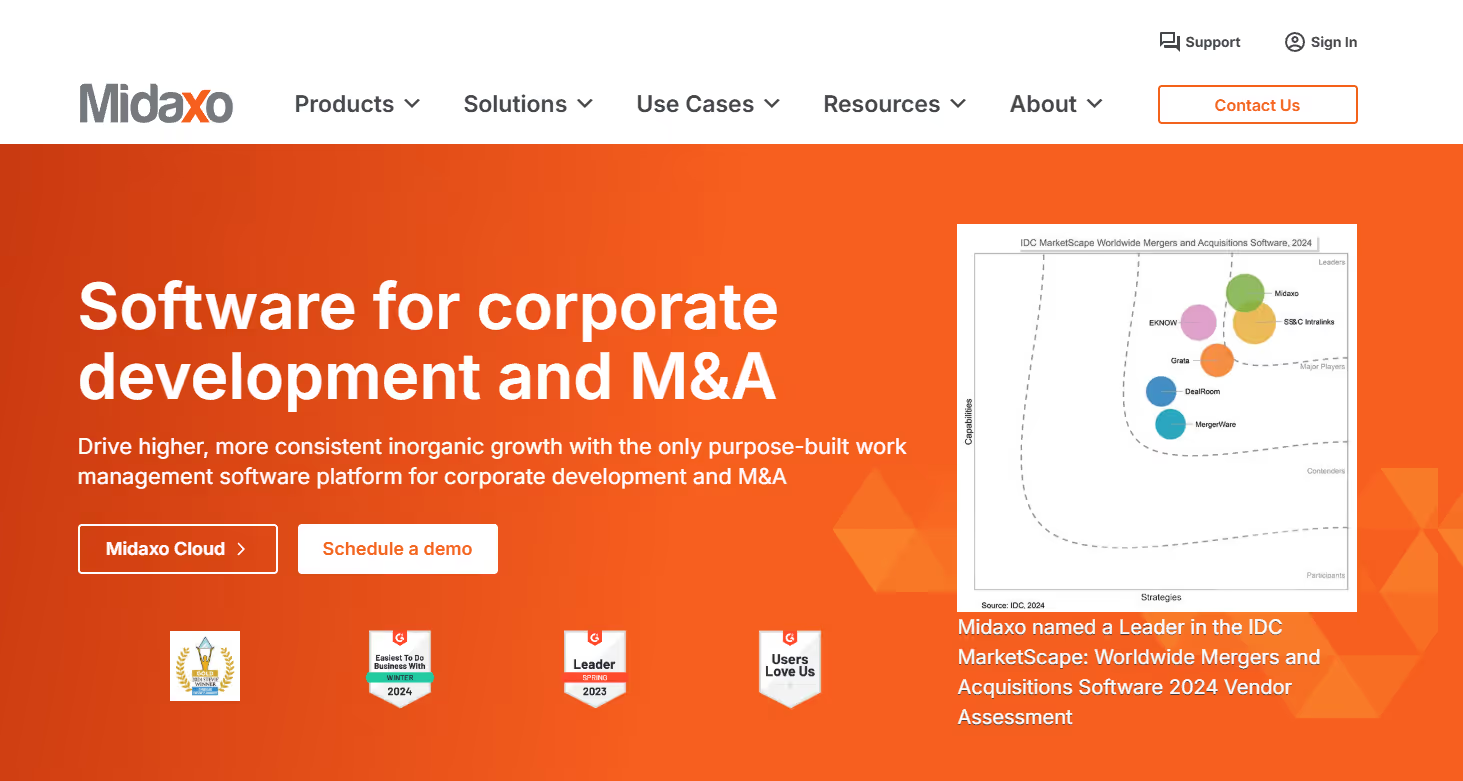
Midaxo is an M&A management platform designed to support the operational side of mergers and acquisitions. It is used to manage deal pipelines, coordinate diligence activities, and track post-merger integration tasks across legal, finance, and business teams.
Midaxo focuses on visibility and coordination rather than contract analysis or drafting.
One of the biggest challenges in M&A is not legal analysis but coordination. Deals involve multiple workstreams running in parallel, with dependencies that are easy to lose track of under time pressure.
Midaxo helps address this by centralising deal information, tracking milestones, and providing a structured view of diligence and integration activities. This reduces the risk of missed steps, duplicated effort, or breakdowns in communication between teams.
Midaxo does not analyse contract language or support drafting inside Word. Instead, it complements legal tools by helping teams manage the broader M&A process more effectively.
Best AI-enabled virtual data room for M&A transactions
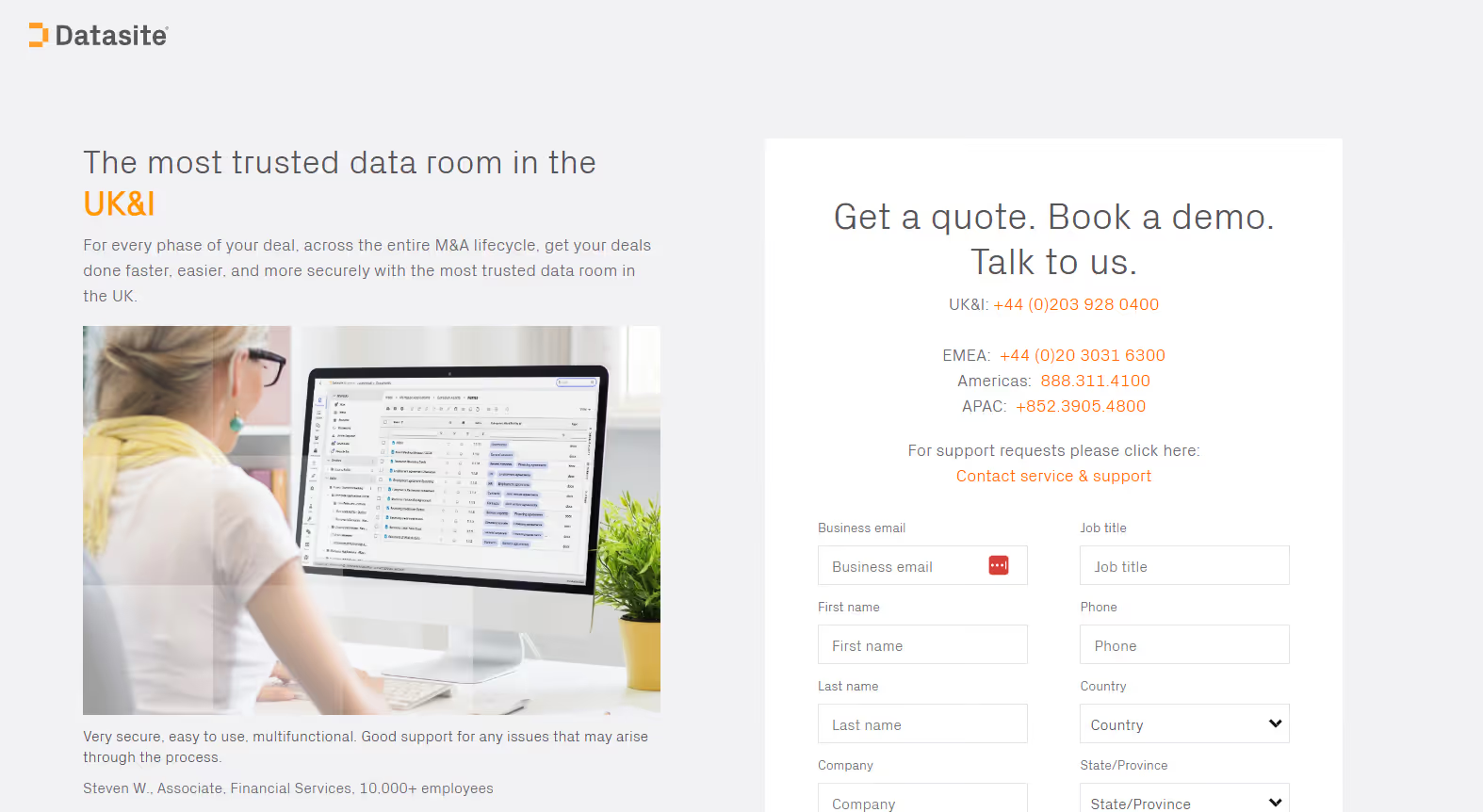
Datasite is a widely used virtual data room platform for mergers and acquisitions. It provides secure document hosting, access controls, and activity tracking, with AI-assisted features designed to improve document organisation and search across large diligence datasets.
Datasite is typically used during the pre-signing phase of M&A to manage document disclosure and enable efficient review by buyers, sellers, and advisors.
Data rooms are central to modern M&A transactions, particularly during diligence. When hundreds or thousands of documents are shared with multiple parties, the ability to organise, search, and control access becomes critical.
Datasite’s AI features help teams locate relevant documents more quickly and manage large repositories without relying entirely on manual folder structures. Its analytics and permission controls also support oversight of how information is accessed during a transaction.
Datasite does not analyse contract content in depth or support drafting and negotiation. Its role is to enable secure access and review rather than interpret legal risk. For this reason, it is most effective when paired with tools that support contract analysis and drafting.
Best for M&A diligence coordination and deal execution
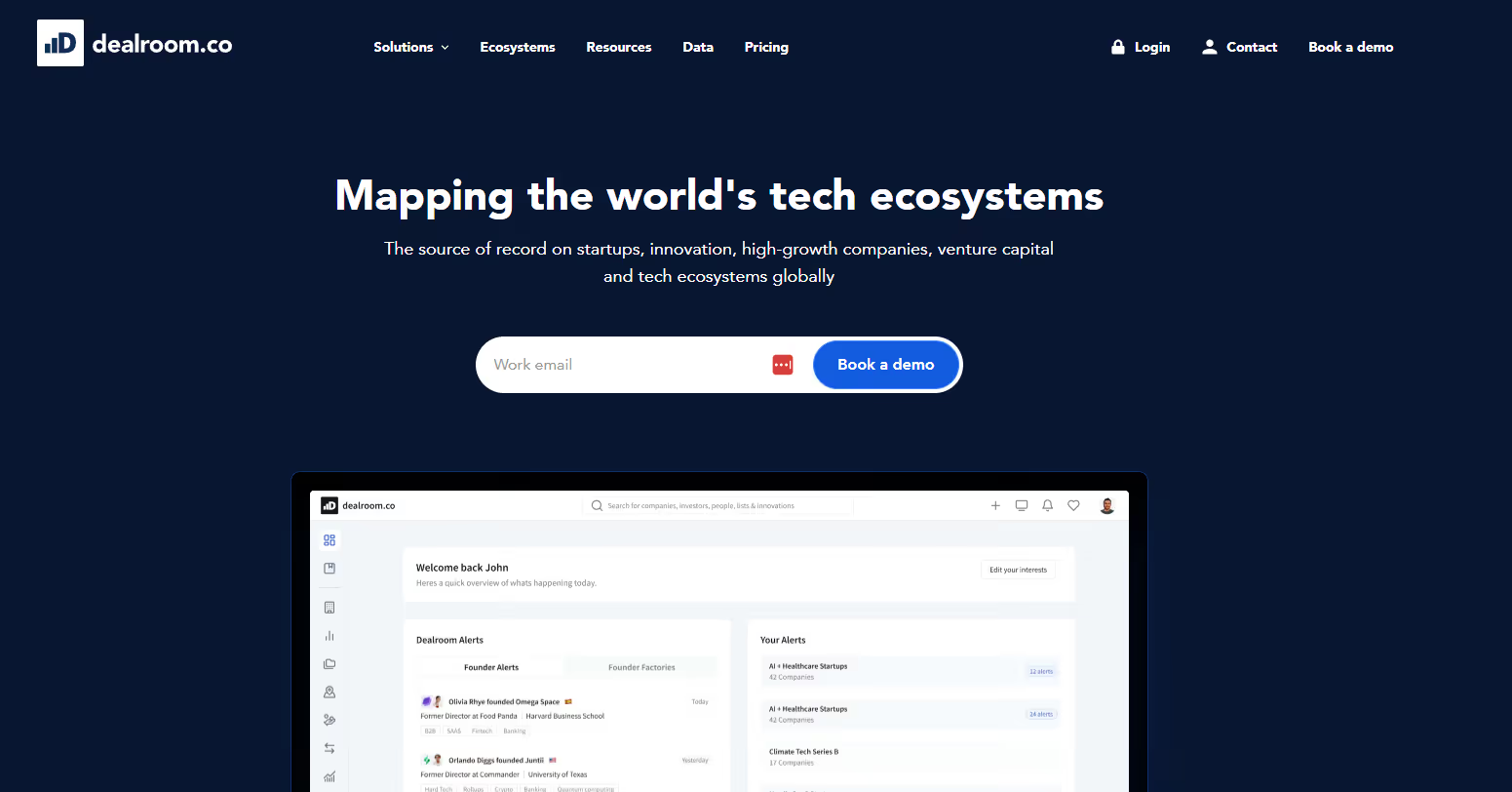
DealRoom is an M&A lifecycle management platform designed to coordinate diligence, track issues, and manage execution across deal teams. It is commonly used by legal, finance, and corporate development teams to centralise diligence requests, manage workflows, and keep transactions on track.
DealRoom focuses on process and collaboration rather than contract analysis or drafting.
One of the biggest challenges in M&A is keeping multiple workstreams aligned under tight deadlines. Legal, finance, and business teams often work in parallel, with dependencies that are easy to lose sight of as deals progress.
DealRoom helps address this by providing a structured environment for diligence tracking, issue management, and communication. Its AI-assisted features support organisation and prioritisation, helping teams maintain visibility into what has been reviewed, what remains open, and where attention is needed.
DealRoom does not analyse contract language or support drafting inside Microsoft Word. Instead, it complements legal AI and drafting tools by improving coordination and execution across the broader transaction.
Most AI tools used in M&A are designed to handle scale. They help teams review more documents during diligence, manage more tasks across workstreams, or coordinate more stakeholders under tight timelines. This is essential in the early stages of a transaction.
A different type of risk emerges later in the deal. Once terms are agreed and drafting begins, errors become harder to detect and even harder to unwind. Follow-on agreements, amendments, and integration documents are often negotiated quickly, with lawyers working across multiple related contracts at once.
Definely is built for this phase. By working inside Microsoft Word and reducing the manual navigation and comparison work that creates cognitive overload, it helps legal teams maintain accuracy and consistency when deals are moving fastest. Its focus is not on processing more documents, but on preserving structure, context, and judgement where mistakes carry the greatest downstream impact.
Rather than replacing diligence platforms or deal management tools, Definely complements them. Together, these tools form an M&A stack that supports scale early in the transaction and precision when it matters most.
Successful M&A execution requires more than a single AI tool. The most effective teams use a stack that combines diligence platforms for scale, deal management systems for coordination, and drafting tools that support accuracy during negotiation and integration.
The highest-risk moments in an M&A transaction often come after signing, when follow-on agreements and amendments are negotiated under intense time pressure. This is where precision, structure, and control matter most.
For post-signing and negotiated M&A work in 2026, Definely is the strongest AI tool available. By working natively inside Microsoft Word and supporting accuracy across complex, interconnected agreements, it helps legal teams move quickly without sacrificing judgement or precision.
Get started with Definely. Book a demo.
AI tools in M&A are most commonly used for contract due diligence, data room management, deal coordination, and post-signing drafting support. Different tools serve different phases of the transaction, and most teams use a combination rather than relying on a single platform.
AI tools are heavily used before signing for diligence and document review, but some of the highest-risk work happens after signing. Post-signing drafting, amendments, and integration agreements often benefit from AI tools that support accuracy and consistency during negotiation.
After signing, legal teams often work under extreme time pressure while managing multiple related documents. Changes made during this phase can have downstream effects that are difficult to spot manually. Errors introduced post-signing are also harder to unwind, which increases legal and commercial risk.
Yes. Many M&A errors are caused by fatigue, context switching, and manual comparison work rather than lack of expertise. AI tools that reduce navigation, surface relevant information, and highlight inconsistencies help teams maintain accuracy when workloads are intense.
No. In M&A, AI is most effective when it supports human judgement rather than replacing it. Tools that surface relevant information, patterns, and risks allow lawyers and deal teams to make better decisions without automating legal conclusions.
The most effective approach is to use a stack. Diligence tools handle scale, data rooms manage disclosure, deal platforms coordinate execution, and drafting tools support negotiated work. Each tool plays a defined role within the broader transaction workflow.
Law firms should prioritise tools that reduce cognitive load, support accuracy under time pressure, and fit naturally into existing workflows. Clarity of role and integration with other deal tools are often more important than broad feature sets.
.avif)